

The Challenge of a Sealed Environment
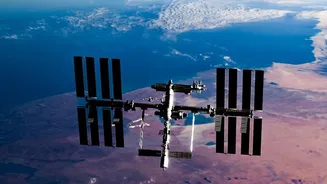
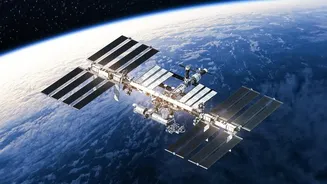
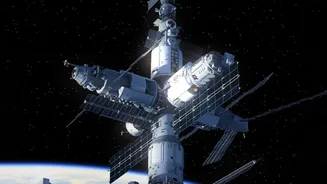
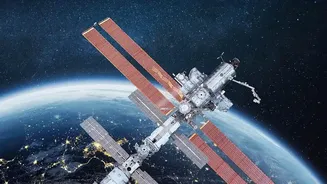
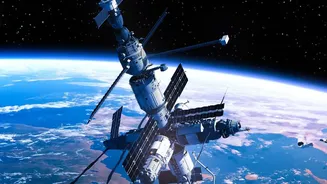
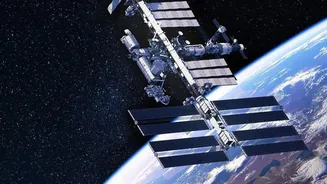
On Earth, our planet’s vast atmosphere and ecosystems naturally clean the air. In the sealed environment of a spacecraft like the International Space Station (ISS), there is no 'outside' to open a window to. Every breath an astronaut takes releases carbon
dioxide (CO2). Electronics, plastics, and even the crew themselves off-gas a variety of trace contaminants known as volatile organic compounds (VOCs). Without a sophisticated life support system, the air would quickly become toxic. The Environmental Control and Life Support System (ECLSS) is the technology that provides breathable air, manages pressure, filters contaminants, and even recycles water. For decades, these systems have kept astronauts safe in low-Earth orbit, but missions to Mars present a much greater challenge.
Upgrading the CO2 Scrubbers
The primary and most immediate threat to air quality in a sealed habitat is the buildup of CO2. On the ISS, the Carbon Dioxide Removal Assembly (CDRA) has been the workhorse, using beds of tiny, porous minerals called zeolites to capture CO2 molecules from the air. However, these systems are only partially closed-loop; they require significant maintenance and lose some oxygen in the process of venting gases. For a multi-year Mars mission where resupply is impossible, a more efficient and reliable system is non-negotiable. NASA is now testing next-generation systems like the Four-Bed Carbon Dioxide Scrubber (FBCO2) and a thermal amine scrubber. The FBCO2 uses an advanced magnetic-bearing blower, which is more reliable and durable than previous designs that were prone to wear. These new systems are designed to be regenerative, meaning they can release the captured CO2 to be converted back into water and oxygen, closing the loop and dramatically reducing the need for resupply from Earth.
Beyond Carbon Dioxide: Tackling Trace Contaminants
While CO2 is the main concern, hundreds of other chemical compounds can accumulate in a spacecraft's cabin. These trace contaminants are released from everything from scientific experiments to the astronauts' own bodies. Traditionally, activated charcoal filters have been used to trap these chemicals, but these filters are consumable and need to be replaced. Future missions require systems that are smaller, more efficient, and regenerable. One promising technology is Photocatalytic Oxidation (PCO). Originally developed by NASA to remove ethylene gas—a compound released by plants that causes them to ripen and decay—PCO uses ultraviolet light and a catalyst like titanium dioxide to break down harmful VOCs into harmless water and carbon dioxide. This not only cleans the air but does so without creating waste or requiring filter replacements, a critical advantage for long journeys.
The Unseen Threat of Dust
When astronauts eventually land on the Moon or Mars, they'll face another airborne foe: dust. Unlike dust on Earth, which is weathered by moisture and wind, lunar and Martian dust consists of tiny, sharp, and electrostatically charged particles. This dust sticks to everything and can easily be tracked inside habitats. Once inside the zero-gravity environment, it doesn't settle but floats freely, posing a significant risk to both astronaut lungs and sensitive equipment. Advanced filtration will be essential for Artemis and future Mars missions, not just to manage metabolic waste products but also to capture these hazardous extraterrestrial particles before they can cause harm.
From the Space Station to Your Home
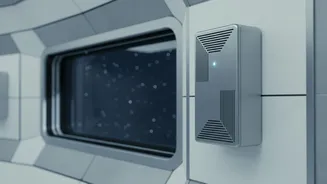
The drive to create robust life support for space has tangible benefits back on Earth. The same PCO technology developed to keep astronauts safe is now used in commercial air purifiers for homes, offices, and hospitals. These devices can destroy airborne pathogens, allergens, and VOCs, improving indoor air quality for everyone. Similarly, advanced sorbent materials created for CO2 capture in space are being explored for their potential to remove carbon dioxide from industrial emissions on Earth. This demonstrates a powerful cycle of innovation, where solving the extreme challenges of space travel leads to technologies that can improve life on our own planet.