






What is Food Fortification?
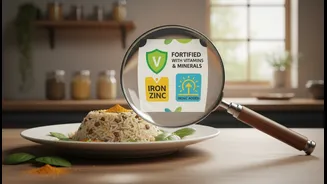
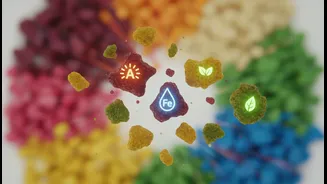
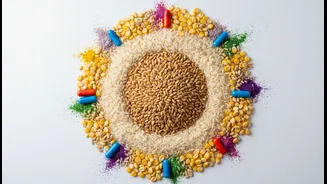
Food fortification is the process of adding essential vitamins and minerals to staple foods to improve their nutritional content. Think of it as a nutritional boost for foods people eat every day. In India, this strategy is overseen by the Food Safety
and Standards Authority of India (FSSAI), which has set standards for fortifying staples like salt with iodine, edible oils and milk with Vitamins A and D, and wheat flour and rice with iron, folic acid, and Vitamin B12. The goal is simple and ambitious: to deliver crucial micronutrients to a vast population through their regular diet, helping to prevent deficiencies that cause serious health problems.
The Promise: A Cost-Effective Solution
The primary argument for fortification is its immense reach and efficiency. Proponents argue it is one of the most cost-effective public health interventions. For just a few rupees per person per year, fortification can deliver nutrients to millions, especially those in vulnerable communities who may not have consistent access to a varied, nutrient-rich diet. This strategy doesn't require people to change their eating habits, a significant advantage in a country with diverse culinary traditions. By adding nutrients to staples consumed daily, fortification aims to tackle widespread issues like anaemia, which affects over half of women and two-thirds of children, and Vitamin D deficiency, which impacts a large portion of the population.
The Concerns: A Blunt Instrument
Despite its promise, food fortification is not without its critics and concerns. Experts describe mandatory fortification as a 'blunt tool' that treats the entire population the same, regardless of individual nutritional needs. This raises the risk of some people consuming excessive amounts of certain nutrients, which can have toxic effects. For example, people with conditions like thalassemia should avoid excess iron, a standard fortificant. Furthermore, some studies question the efficacy, pointing out that nutrients from fortified foods may not be absorbed as well as those from whole foods. There are also questions around industry influence and whether fortification benefits large corporations more than public health.
The Core Tension: Dietary Diversity
The most significant debate centres on fortification's relationship with dietary diversity—the gold standard of nutrition. Health experts stress that eating a wide variety of foods is the best way to get the full spectrum of nutrients the body needs. The fear is that an over-reliance on fortification could overshadow and de-prioritise efforts to promote diverse diets. If people believe fortified rice or flour is a complete solution, the incentive to seek out and consume fruits, vegetables, millets, and pulses diminishes. Recent analyses suggest that dietary diversity is more effective in reducing anaemia than consuming fortified foods alone, highlighting that fortification cannot be the only answer.
Avoiding 'Fortification-as-Cure'
A major risk is the promotion of fortification as a cure-all. When fortified products are marketed as a simple fix for complex nutritional problems, it misleads consumers. This narrative can create a 'health halo' around processed foods, suggesting they are superior to natural, unfortified options. The policy challenge is to communicate that fortification is a supplementary measure, a safety net, and not a substitute for a healthy, balanced diet. It's a tool to correct deficiencies at a population level, not a license to ignore the foundational principles of good nutrition.
The Path Forward: An Integrated Approach
So, can food fortification work alongside dietary diversity? Yes, but only if it's implemented as one part of a much larger, more holistic strategy. Success hinges on a balanced approach where fortification is used to address specific, widespread deficiencies while policy and education efforts simultaneously and vigorously promote dietary diversity. This means investing in agriculture that supports a variety of crops, ensuring access to affordable fresh foods, and running public health campaigns that celebrate India's rich culinary heritage of diverse, nutrient-dense meals. Fortification can help fill the immediate gaps, but the long-term goal must be to build a food system where such interventions become less necessary.