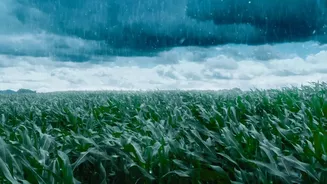








A New Kind of Monsoon
The rhythm of India's rainfall is changing. While the total volume of rain might remain the same in some areas, the pattern is becoming more erratic. Scientific studies point to an increase in extreme weather events: long, dry spells are being broken
by short, intense downpours. One study highlighted that many parts of India are experiencing drying conditions, which can lead to drought, a key risk for tropical trees. This shift means that forests accustomed to steady, seasonal moisture are now facing prolonged periods of water stress followed by deluges that the soil cannot always absorb. Researchers have noted a westward shift of the monsoon system, which has intensified what they call "ecological droughts"—long-term moisture stress—in eastern and southern India. This new reality of feast or famine is putting ecosystems under a type of pressure they have not evolved to handle.
Forests Under Pressure
The impacts of these altered rainfall patterns are complex and vary across India's diverse forest landscapes. Intense rainfall can lead to soil erosion, washing away vital nutrients that trees need to thrive. Conversely, extended droughts create a tinderbox effect, dramatically increasing the risk of forest fires. A study of the Panchmarhi Biosphere Reserve in central India found that a combination of rising temperatures and shifting rainfall contributed to an increased risk of forest fires. Trees under drought stress are also more susceptible to pests and diseases. When there is not enough water, trees struggle to cool their leaves, which can lead to cell damage and ultimately, a systemic failure that can cause the tree to die. This 'browning' or drying up of forests has been reported across several tropical regions as a result of combined moisture and heat stress.
Not All Forests Are Affected Equally
The vulnerability of a forest depends heavily on its type and location. Dry deciduous forests, such as the teak forests in central India, operate closer to their moisture limits and are more susceptible to long droughts and rising temperatures. Research in the Panchmarhi Biosphere Reserve revealed that dry teak forests saw the highest loss in canopy cover, a staggering 41%, between 1972 and 2020, driven partly by these climatic shifts. In contrast, moist deciduous forests, which receive more rainfall and have deeper canopy cover, may be slightly more resilient to short-term instability. However, even these wetter ecosystems, like those in the Western Ghats, are not immune. Scientists warn that changes to the timing of seasons can affect tree lifecycles, which in the long term could weaken their ability to act as carbon sinks.
The Ripple Effect on Ecosystems and People
Healthy forests are more than just trees; they are complex systems that provide essential services. They regulate water flow, recharge groundwater, and support immense biodiversity. When forests are degraded, these services are compromised. Changes in flowering and fruiting times can disrupt the delicate, co-evolved relationships between plants and the animals that depend on them for food. This has a cascading effect, potentially leading to a decline in wildlife populations. For the millions of people in India who depend on forests for their livelihoods—for everything from fuelwood and fodder to medicinal plants—the degradation of these resources represents a direct threat to their economic and social stability. Weakened forests are also less effective at absorbing carbon, which could undermine India's efforts to combat climate change.
Building Future-Proof Forests
The challenge is significant, but so are the opportunities for action. Understanding how different ecosystems respond to these new rainfall patterns is the first step toward developing targeted conservation strategies. Experts suggest that evidence-based forest management and climate adaptation measures are critical for building resilience. This could involve promoting the growth of native tree species that are naturally more tolerant to drought, implementing better soil and water conservation techniques to manage intense rainfall, and improving forest fire prevention and control systems. As India's climate continues to change, protecting its forests will require forward-thinking policies that acknowledge the intricate link between the atmosphere and the health of the land.