







A Stamp of Global Prestige
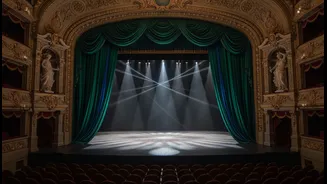
For any art form, the venue is part of the message. When Indian classical dance is programmed at world-renowned institutions, it receives a powerful endorsement. These stages, which regularly host premier ballet companies and orchestras, elevate the perception
of forms like Odissi and Kuchipudi. They are presented not as niche folk expressions, but as world-class artistic disciplines deserving of a global audience. For instance, the All-Indian Dance Festival held at Carnegie Hall brought together nearly 400 artists, presenting a rich tapestry of classical and folk forms to an audience of almost 3,000. This kind of visibility is invaluable. It shifts the art form from being primarily for a diaspora audience to being a significant event in a city's cultural calendar, attracting critics, enthusiasts, and newcomers from all backgrounds. This exposure helps dismantle stereotypes and frames the art within a context of universal excellence.
Reaching Beyond the Diaspora
While the Indian diaspora provides a crucial support system, the true measure of global impact is reaching audiences with no prior connection to India. Major international venues are uniquely positioned to make this happen. A performance by a troupe like the Nrityagram Dance Ensemble at The Joyce Theater in New York is marketed to a broad spectrum of dance lovers, not just the Indian community. According to one former ambassador, while there are 32 million people of Indian origin abroad who act as cultural ambassadors, the goal is to enter the local lexicon of the arts. The emotive power and spiritual depth of Indian dance can deeply connect with international audiences, offering them a different aesthetic experience than what they might be used to. This cross-cultural connection fosters a deeper, more nuanced understanding of Indian culture itself, moving beyond superficial representations.
A Catalyst for Creative Evolution
Presenting to a non-Indian audience often requires artists to innovate. Without diluting the core grammar and authenticity of their tradition, performers must find new ways to communicate complex mythological stories and spiritual ideas. This challenge can be a powerful creative catalyst. Artists like Akram Khan have become global icons by creating hybrid works that are rooted in Kathak but speak a contemporary language. His productions, often featured at Sadler's Wells, blend traditional Indian dance with modern choreography, stagecraft, and musical influences, creating work that is both culturally specific and universally resonant. This evolution is not a corruption of the form but a sign of its vitality. By engaging in collaborations and re-imaginings, artists ensure that classical dance remains a living, breathing tradition capable of conversing with the modern world.
Navigating the Challenges
Of course, taking these ancient forms abroad is not without its difficulties. The primary challenge is context. How does a performer convey the intricate stories of the epics or the subtle nuances of 'rasa' (emotion) to an audience unfamiliar with the cultural background? There is also the risk of commercial pressures leading to a dilution of the form to make it more palatable for shorter, modern attention spans. Financial viability is another significant hurdle, as touring internationally is expensive, and government or institutional support is often essential. Dancers and choreographers carry the immense responsibility of representing a rich heritage authentically while also making it accessible, a delicate balancing act that requires immense skill and artistic integrity. Despite these challenges, the overwhelming consensus is that the rewards of global exposure far outweigh the risks.