

The Power of the Quarter-Turn
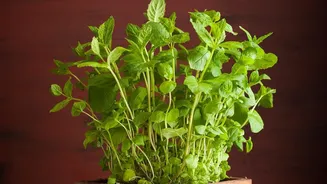
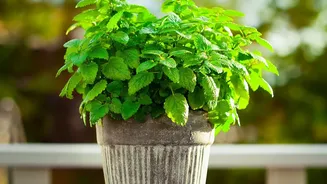
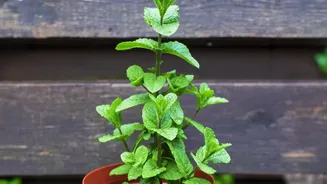
Plants are natural light-seekers, a tendency known as phototropism. When a mint pot sits in the same position on a windowsill day after day, only one side gets consistent sun. This forces the plant to stretch and lean towards the light, resulting in a plant that
is dense and leafy on one side but sparse, weak, and leggy on the other. Rotating your pot is the simple but effective solution. By giving the pot a quarter-turn every few days, you ensure every part of the plant gets its share of sunlight. This encourages balanced, upright growth, leading to a much fuller, healthier, and more attractive plant. It's a small habit that prevents lopsidedness and promotes robust strength from all angles.
Build a Strong Foundation
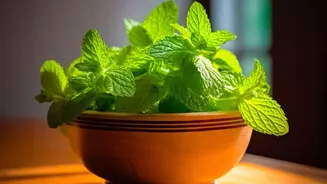
While sunlight is crucial, the right home for your mint's roots is just as important. Mint spreads via shallow roots and runners, so it prefers a wide pot over a deep one; a container at least 8 to 10 inches across is ideal for a single plant. Smaller pots can dry out too quickly, stressing the plant. Always choose a pot with drainage holes, as mint likes moist soil but will quickly succumb to root rot in waterlogged conditions. When it comes to soil, avoid using dense garden soil, which compacts in pots and can harbor pests. Instead, use a quality, peat-free potting mix, ideally blended with perlite to improve drainage and aeration.
The Art of Watering Mint
Watering is a balancing act. Mint is a thirsty herb that dislikes drying out completely, a nod to its wild origins along stream banks. Unlike herbs such as rosemary, which prefer to dry out between waterings, mint thrives in consistently moist soil. A good rule of thumb is to water whenever the top inch of the soil feels dry to the touch. For an indoor pot, this could mean watering every few days, but it depends on your home's temperature and humidity. Overwatering is a common killer of indoor mint; if the soil is soggy, the roots can't get oxygen and will begin to rot. It's better to water deeply and less often than to give it small sips every day.
Prune for Prolific Growth
Regularly harvesting your mint is one of the best things you can do for its health. It may feel counterintuitive to cut it back, but pruning encourages the plant to become bushier and more productive. When you snip a stem, do it just above a pair of leaves. This will signal the plant to send out two new stems from that point, effectively doubling the growth. Aim to harvest the young, tender tips, which have the best flavour. A good guideline is to never remove more than one-third of the plant at a time. This ensures it has enough foliage left to photosynthesize and recover quickly, providing you with a continuous supply of fresh leaves.
Light Is More Than Just Location
Mint is more forgiving of lower light than many other herbs, but it still needs several hours of bright, direct sun to truly thrive. A south- or southwest-facing window is ideal. If your plant's stems seem to be stretching out with large gaps between the leaves, it's a clear sign that it needs more light. This condition, known as etiolation, also results in weaker flavour. In addition to rotating your plant, make sure it's close to the window glass, but not so close that the leaves touch, as they can be damaged by cold in the winter. If you lack a bright window, a simple LED grow light can make a significant difference.