


Anxiety in the Age of Automation
The arrival of AI that can write articles, design logos, and compose music in seconds has sent a wave of anxiety through creative industries. This concern is not entirely unfounded; if software can produce content instantly, it's easy to assume that creative professionals
will be among the first to be displaced. The fear is that AI, capable of processing and remixing vast amounts of human culture, could devalue human skill and flood the world with machine-generated content, making original work harder to find and monetise. This disruption is already being felt, particularly in roles focused on standardized, high-volume content.
A Tool, Not a Replacement
Despite the legitimate concerns, the consensus among many experts is that AI is not an existential threat to creativity itself. Instead, they see it as the latest in a long line of technological advancements—like the camera or the music synthesizer—that reshaped but did not eliminate creative fields. The dominant view is that AI will function as a powerful assistant or a 'cognitive partner'. It can automate repetitive and time-consuming tasks like image editing, generating design variations, or drafting initial concepts, freeing up human creators to focus on the more strategic and meaningful aspects of their work. According to a 2024 Adobe survey, 74% of creators said AI improves their efficiency, empowering them to tackle projects they otherwise wouldn't have.
The Irreplaceable Human Element
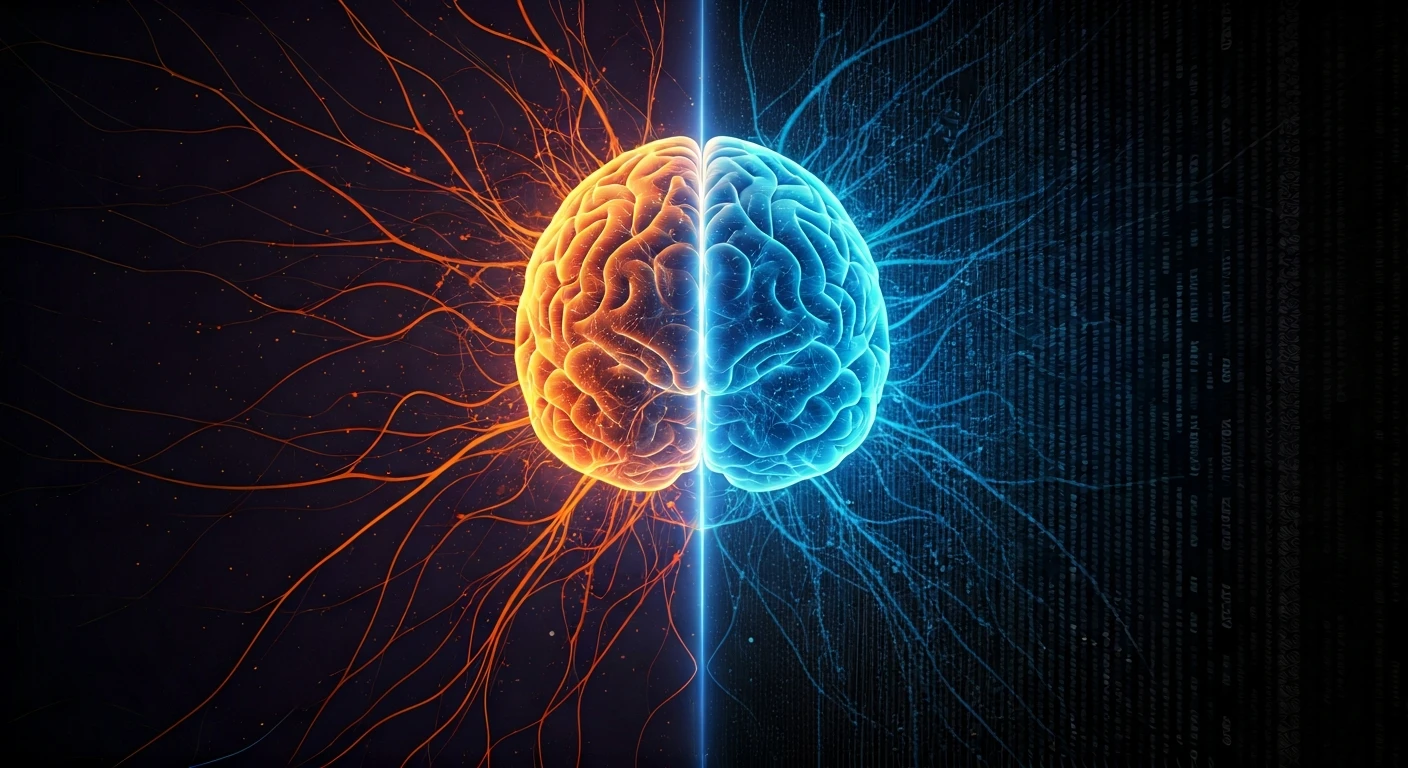
The core of the argument against AI replacing creativity lies in what machines fundamentally lack: lived experience, emotion, and genuine understanding. AI models generate outputs by identifying and replicating patterns from massive datasets of existing human work; they predict what should come next based on what has come before. They do not possess intention, intuition, or the capacity for an 'aha' moment born from personal memory and feeling. An AI can write a poem about love, but it has never been in love. It is this depth, authenticity, and emotional connection that resonates with audiences and remains, for now, the unique domain of human artists.
The New Creative Workflow
Rather than rendering creators obsolete, AI is changing how they work. The future of creative jobs appears to lie in a synergy between human and artificial intelligence. Creatives are already using AI as a tireless brainstorming partner, generating dozens of ideas to kickstart a project. This process transforms the AI into an infinite canvas, allowing artists to explore possibilities without the fear of wasting time or resources. However, there is a risk to be aware of: over-reliance on AI can lead to homogenized ideas, as the models tend to converge on similar outputs for similar prompts. The key is using AI as a starting point, not the final word.
Evolving Skills for a New Era
The future doesn't belong to the creators who resist AI, but to those who learn to collaborate with it. Jobs may not disappear so much as evolve. New roles are already emerging, such as 'AI content curators' who refine machine-generated outputs and 'creative technologists' who bridge storytelling with AI capabilities. The most valuable skills in this new landscape will be critical thinking, strategic ideation, and the ability to direct AI tools to achieve a unique vision. The professional of the future will not just be a writer or a designer, but a creative director for intelligent systems, blending their unique perspective with the machine's computational power.