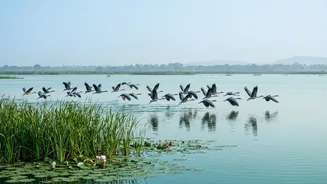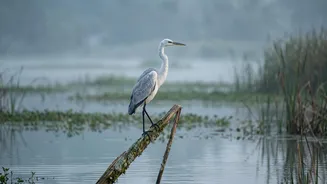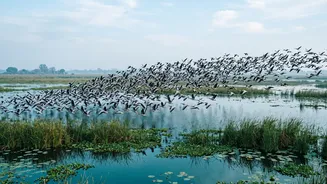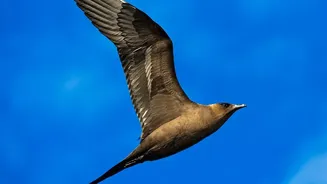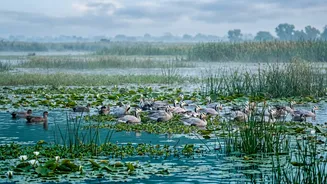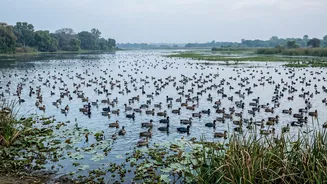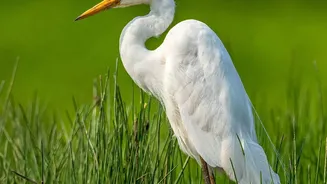





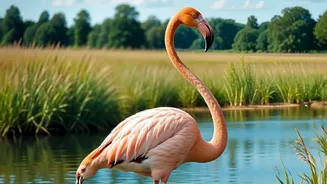

Every year, a breathtaking spectacle unfolds in the skies above India as millions of birds arrive after epic journeys. These travellers are on the Central Asian Flyway, and for them, India’s wetlands are not just a destination but a critical lifeline.
An Avian Superhighway
The Central Asian Flyway (CAF) is one of the world's great migratory superhighways for birds. It stretches from the northernmost breeding grounds in Siberia and the Arctic all the way to the warm wintering areas in South Asia and the Indian Ocean. Covering 30 countries, this vast corridor is used by at least 279 populations of 182 waterbird species, including many that are globally threatened. For these birds, the journey is an immense feat of endurance, often crossing formidable barriers like the Himalayas. Their survival depends entirely on a chain of safe, food-rich habitats where they can rest and refuel. This is where India plays an indispensable role.
India: The Ultimate Pit Stop
Strategically located at the heart of the flyway, India serves as a vital stopover and wintering ground for over 90% of the bird species that use this route. After flying thousands of kilometres, often at extreme altitudes, birds arrive exhausted and in desperate need of nourishment. India’s vast network of wetlands—from high-altitude lakes in Ladakh to coastal lagoons in Odisha and Tamil Nadu—provides the perfect five-star service. These habitats offer a rich buffet of fish, insects, and aquatic vegetation, allowing birds to replenish their energy reserves before continuing their journey or settling in for the winter. Without these critical Indian ‘motels’, the entire migration cycle would be in jeopardy.
Crown Jewels of Conservation
Several Indian wetlands have gained international fame for the sheer number and diversity of birds they host. Chilika Lake in Odisha, Asia's largest brackish water lagoon, welcomes millions of birds each winter. Keoladeo National Park in Rajasthan, a UNESCO World Heritage Site, is another legendary wintering ground. Further north, Pong Dam Lake in Himachal Pradesh and the Gharana wetland in Jammu are crucial for species like the bar-headed goose, which famously conquers the Himalayas. Recent additions to the list of internationally important wetlands, like Sukhna Wetland in Chandigarh and Sauj Jheel in Uttar Pradesh, underscore the nationwide importance of these ecosystems for sheltering threatened species like the Pallas's fish eagle and the sarus crane.
Threats on the Horizon
Despite their importance, these critical habitats are facing unprecedented threats. Rapid urbanisation, agricultural expansion, and industrial pollution are leading to the degradation and loss of wetlands across the country. Water contamination from industrial effluents and sewage harms the delicate food webs that birds rely on, while invasive plant species like water hyacinth can choke entire lakes, rendering them inhospitable. Furthermore, climate change is altering rainfall patterns and temperatures, disrupting the environmental cues that birds have followed for millennia and affecting water availability at these crucial sites. Human disturbances, including excessive tourism and noise, also add to the pressure on these already vulnerable ecosystems.
A Shared Responsibility
Protecting these wetlands is not just about saving birds; it's about preserving the health of ecosystems that provide vital services to millions of people, including water purification and flood control. Recognising this, India has stepped up its conservation efforts. The country now has the largest network of Ramsar Sites (wetlands of international importance) in Asia, with a tally reaching 103 as of October 2026. National initiatives like the Wetlands (Conservation and Management) Rules and the National Action Plan for the conservation of migratory birds are in place. Community involvement and citizen science projects are also playing an increasingly important role, helping monitor bird populations and protect their habitats.