





Create Visual Boundaries with Furniture
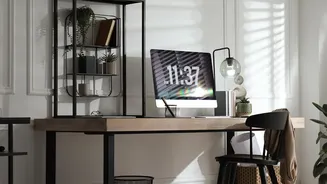
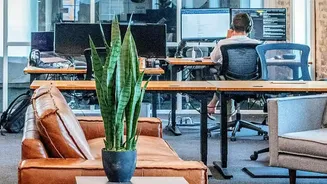
You don't need walls to create zones. The simplest way to signal a shift in space is by strategically arranging what you already own. Place your desk facing a wall to avoid your living area being in your line of sight while you work. Use the back of your sofa
as a natural divider between your 'office' and your 'living room'. A stylish folding screen or an open-backed bookshelf can create a physical separation that feels intentional but not bulky. Even an area rug placed under your desk can visually contain your workspace, making it feel like a separate room within a room. The goal is to create a clear visual cue that helps your brain associate one area with focus and another with rest.
Use Lighting to Shift the Mood
Never underestimate the power of lighting. During the workday, use a bright, cool-toned light at your desk to promote alertness and focus. Once you log off, switch off that task light completely. Transition to warmer, softer lighting in your living area using table lamps, floor lamps, or even string lights. This change in illumination is a powerful sensory signal to your brain that the time for focused work has ended and the time for relaxation has begun. Dimming the lights tells your body and mind that it's time to unwind, making it easier to leave work-related stress behind.
Implement a 'Shutdown Ritual'
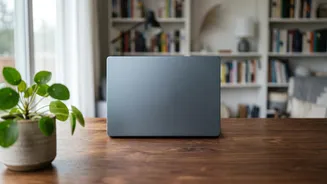
The commute used to provide a natural transition between work and home. Remote workers need to create their own. A 'shutdown ritual' is a short, consistent routine that marks the definitive end of your workday. This could be a five to ten-minute process: tidy your desk, write down your top three priorities for tomorrow, close your laptop, and put it away in a drawer or cabinet. Some people find changing out of their 'work clothes' into comfortable loungewear to be an effective signal. The key is the final action—a clear, deliberate step that tells your brain, 'Work is now complete'.
Engage Your Sense of Smell
Scent is deeply connected to memory and emotion, making it a powerful tool for creating distinct atmospheres. This practice, known as 'scent zoning', involves using different fragrances for different areas or times of day. For your workspace, consider an invigorating scent like citrus, mint, or rosemary to enhance focus. For your evening relaxation zone, switch to a calming aroma like lavender, sandalwood, or chamomile. You can use candles, essential oil diffusers, or room sprays. This sensory shift helps create a clear line between the productive energy of your workday and the tranquil calm of your evening.
Pack Away Your Work
Out of sight, out of mind. This is one of the most effective strategies for small spaces. If your 'office' is also your dining table, it's crucial to completely clear it of all work-related items at the end of the day. Invest in a storage box, a basket, or a designated cabinet where you can store your laptop, notebooks, and any other work paraphernalia. The physical act of packing everything away reinforces your shutdown ritual and removes the constant visual reminder of your professional obligations, allowing you to be more present in your personal time.
Leverage Multi-Functional Furniture
In a small apartment, every piece of furniture should work hard. Consider investing in multi-functional or transformable pieces. A coffee table with a lift-top can serve as a desk during the day and revert to a regular coffee table at night. A secretary desk can be closed to hide away your work clutter. There are even wall-mounted desks that fold away to become almost invisible when not in use. This 'transformer' furniture allows a single space to serve two distinct purposes without feeling permanently cluttered by work equipment.