



The Threat from Above
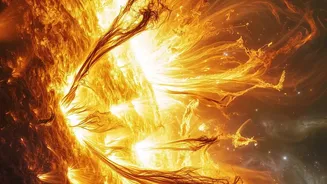
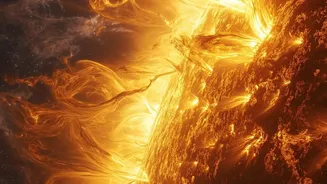
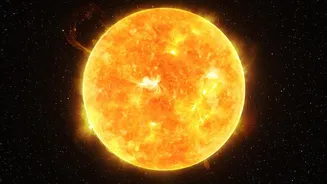
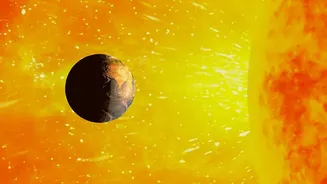
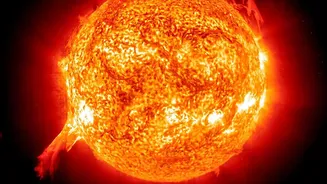
A solar storm begins with an event like a solar flare or a coronal mass ejection (CME), which is a massive eruption of plasma and magnetic fields from the Sun's corona. While a flare's light and radiation reach Earth in about eight minutes, potentially
disrupting radio and GPS signals, the more dangerous CME travels much slower. This cloud of charged particles can take anywhere from 15 hours to several days to cross space and slam into Earth's magnetic field. It is this interaction that poses the greatest threat to our terrestrial infrastructure.
How Storms Cripple the Grid
When a CME buffets Earth's magnetosphere, it induces powerful, low-frequency electrical currents on the planet's surface. These are called geomagnetically induced currents, or GICs. Long conductors, like high-voltage transmission lines, act like giant antennas, picking up these stray currents. The grid is designed for alternating current (AC), but GICs are essentially direct current (DC). When this unwanted DC flows into the large transformers that are the backbone of the power system, it can cause them to saturate, overheat, and even suffer permanent damage. This can lead to voltage instability, trigger cascading relay trips, and ultimately cause widespread, long-lasting blackouts, as happened in Quebec in 1989.
A Network of Watchful Eyes
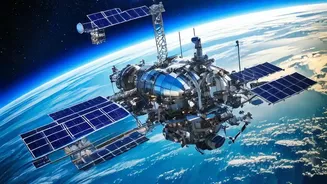
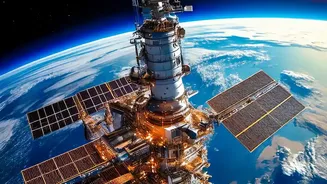
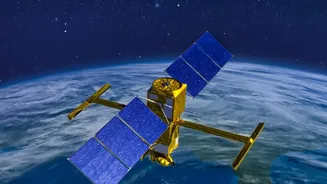
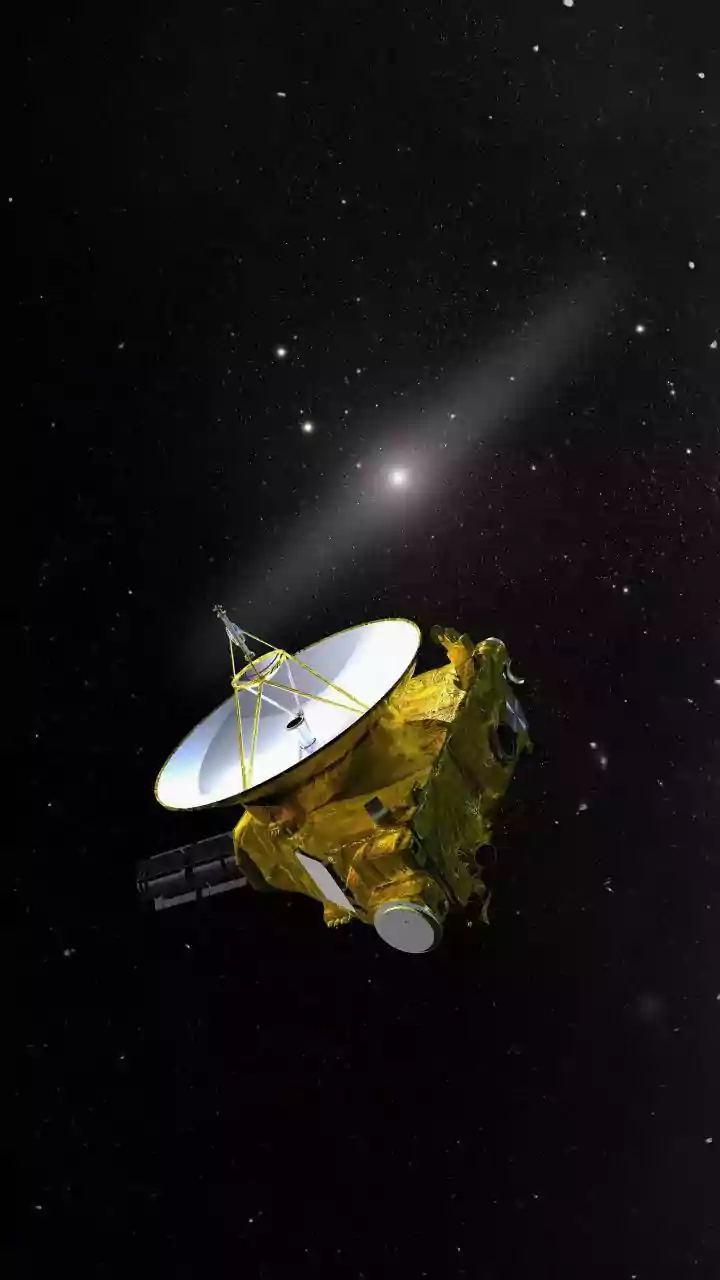
The first line of defense is a network of satellites that constantly monitor the Sun. NASA and NOAA's Deep Space Climate Observatory (DSCOVR) satellite is a key player. Positioned at a gravitationally stable point about 1.5 million kilometers from Earth, it directly measures the solar wind—the stream of charged particles flowing from the Sun. When it detects the tell-tale signs of an approaching CME, it sends an alert. This provides the most direct warning of what is heading our way. Other satellites, like the GOES series, also provide real-time imagery of solar flares and eruptions, giving forecasters a complete picture of the Sun's activity.
From Warning to Action
The data from these satellites streams to places like NOAA's Space Weather Prediction Center (SWPC), the official source for space weather alerts in the United States. Forecasters there analyze the data to predict the storm's arrival time and intensity. Depending on the speed of the CME, this warning can give power grid operators anywhere from 12 to 72 hours of lead time, though sometimes it can be much less. This window is critical. In response to a warning, utility companies can take protective measures. They can postpone risky maintenance, adjust the grid's configuration to make it more resilient, reduce the load on vulnerable transformers, or even take certain equipment offline to protect it from damaging currents. These actions, guided by forecasts, can prevent billions of dollars in damage and avoid extended blackouts.
The Future of Forecasting
The system is constantly improving. Researchers are now developing AI models that can analyze solar data with incredible speed, aiming to provide more precise predictions about where and how a storm will impact Earth. One such algorithm, called DAGGER, can make a prediction in under a second for the entire globe, a process that used to be computationally prohibitive. New satellites are also planned to ensure there are no gaps in our observation capabilities. These advancements are crucial, as our reliance on stable electrical and communication systems grows every year. The ability to look ahead and prepare for a storm from space is a cornerstone of our modern society's resilience.