




What Exactly Are Perovskite Solar Panels?
Imagine a solar cell made from a synthetic, crystal-like material that can be 'printed' like ink. That's the essence of a perovskite solar panel. Unlike traditional silicon panels, which require high-temperature, energy-intensive processes to purify silicon wafers,
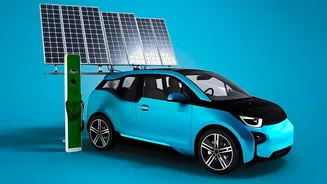
perovskites are a family of compounds with a specific crystal structure. The active layer can be created at near room temperature by dissolving precursor chemicals into a solution and depositing it as a thin film. This simplicity is a game-changer, opening the door to flexible, lightweight, and even semi-transparent panels that could be integrated into windows, vehicles, or building facades.
A Quantum Leap in Efficiency
The most compelling story about perovskites is their incredible speed of improvement. While silicon technology took over 40 years to reach 25% efficiency, perovskites achieved comparable results in just 15 years. In lab settings, the records are falling at a dizzying pace. Single-junction perovskite cells have achieved efficiencies of over 26%. The even bigger breakthrough is in tandem cells, where a thin layer of perovskite is placed on top of a traditional silicon cell. This combination allows the panel to capture a wider spectrum of sunlight; the perovskite layer absorbs high-energy blue light, while the silicon layer below captures the red and infrared light. This tag-team approach has pushed lab efficiencies to a record-breaking 34.85%, surpassing the theoretical efficiency limit of silicon-only cells.
The Cost-Effectiveness Advantage
Higher efficiency is only half the story. The ultimate goal is to lower the cost of solar energy, and this is where perovskites truly shine. The materials used to make perovskites are more abundant and cheaper than highly purified silicon. Furthermore, the manufacturing process is far simpler and less energy-intensive. Instead of large, rigid factories, perovskite cells can be made using printing techniques, potentially slashing production costs. While current manufacturing costs for early-stage perovskite modules can be higher than mature silicon technology, the potential for dramatic cost reduction is significant. As production scales up, experts believe the combination of lower material costs and higher efficiency will make solar power more affordable than ever.
The Major Hurdle: Durability
If perovskites are so revolutionary, why aren't they on every rooftop? The primary challenge has been durability. Early perovskite cells degraded quickly when exposed to real-world conditions like moisture, heat, and continuous sunlight — the very things a solar panel must endure. While a standard silicon panel comes with a 25-year warranty, early perovskites had much shorter lifespans. However, recent breakthroughs are rapidly closing this gap. Scientists have made significant strides in improving the stability of perovskite materials through new chemical compositions and advanced encapsulation techniques that protect the cells from the elements. Companies are now developing tandem modules that pass industry-standard durability tests, suggesting that the problem of degradation is on the verge of being solved.
Coming Soon to a Rooftop Near You?
The transition from the lab to the mass market is already beginning. The first commercial perovskite-silicon tandem panels began shipping in 2024 for select projects. In India, startups incubated at institutions like IIT Bombay and IIT Delhi are pioneering local development and commercialisation efforts. While widespread residential availability might still be a few years away, the technology is no longer a distant dream. Early applications in the Indian market may focus on niche areas like building-integrated photovoltaics (BIPV) and portable power solutions before scaling up to large solar farms and residential rooftops. As manufacturing matures and durability is proven over the long term, perovskite technology is set to become a mainstream option for clean, affordable power.