


The Monsoon Challenge
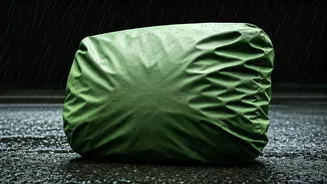
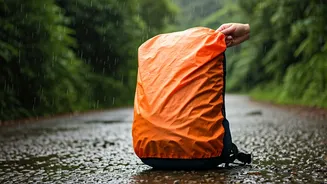
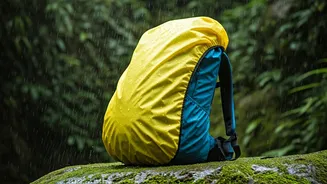
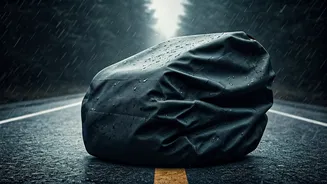
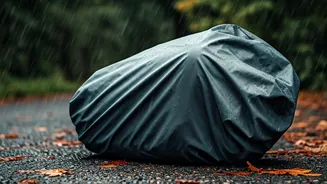
Let’s be clear: a sprinkle is not the same as an Indian monsoon downpour. The rain here isn’t just wet; it's persistent, often driven by high winds, and comes from all angles. A standard, flimsy rain cover that came free with your backpack is designed
for a light shower, not a relentless deluge on the highway. It might protect against vertical rain for ten minutes, but it will quickly fail against the spray kicked up by a passing lorry or the sideways lashing you’ll experience on a bike. For a real monsoon journey, you need to upgrade your definition of ‘waterproof’ from a feature to a mission-critical system.
Decoding 'Military Grade'
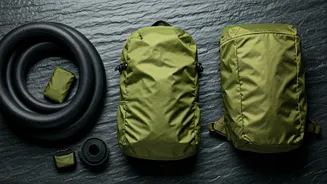
The term 'military grade' is mostly marketing. It’s designed to evoke images of toughness and reliability. However, instead of searching for a product with this label, you should look for the features that *earn* it. True durability comes from the material. Look for high-denier fabrics, like 150D Polyester or 210D Ripstop Nylon. ‘Denier’ (D) is a measure of fibre thickness; a higher number generally means a tougher, more abrasion-resistant fabric. ‘Ripstop’ indicates a special weave with reinforced threads that prevent small tears from becoming large rips—essential for gear that’s going to be strapped down, scraped, and exposed to the elements.
The Science of Staying Dry
Not all waterproof materials are created equal. The key is understanding the coatings and construction. Most quality covers use a Polyurethane (PU) coating on the inside, which forms a barrier against water. Look for a hydrostatic head rating, often measured in millimetres (e.g., 2000mm, 5000mm). This rating indicates how much water pressure the fabric can withstand before it starts to leak. For Indian monsoons, a minimum of 2000mm is advisable, but 5000mm or higher offers serious peace of mind. Some covers also have a Durable Water Repellent (DWR) finish on the outside, which makes water bead up and roll off, providing the first line of defence.
Seams: The Achilles' Heel
A cover is only as waterproof as its weakest point, and that is almost always the seams. Stitching creates thousands of tiny holes where water can penetrate. A truly waterproof cover must have ‘taped’ or ‘sealed’ seams. This means a waterproof tape has been applied over the seams on the interior of the cover, effectively closing those tiny puncture holes. If the product description doesn’t explicitly mention sealed seams, it’s not designed for heavy rain. It’s a non-negotiable feature for any serious monsoon traveller.
A Secure Fit Is Everything
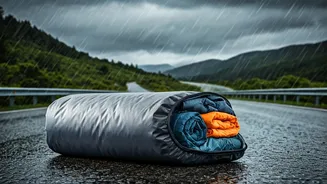
What good is a waterproof cover if it flies off your bag at 80 km/h? Most basic covers rely on a simple elasticated hem, which is fine for walking but useless for a road trip. For biking or strapping a bag to a car roof, you need a multi-point fastening system. A good cover will have an elastic hem for initial fitting, but it must also include at least one, and preferably two, adjustable straps with buckles that run horizontally or vertically across the back of the pack. This secures the cover to the bag and the bag’s harness, ensuring it stays put no matter the wind or speed.
Double Down on Protection
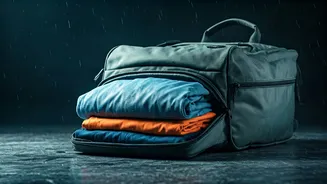
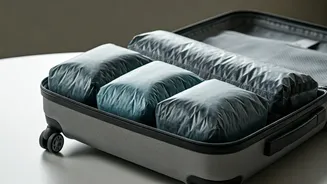
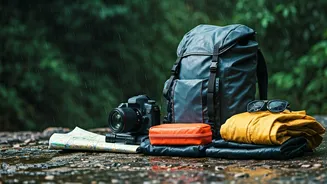
Even with the best cover, it’s wise to have a backup plan, especially for electronics and important documents. The ultimate strategy is defence-in-depth. Use dry bags or even heavy-duty plastic bags *inside* your backpack to compartmentalise and protect your most valuable items. A small 5-litre dry bag for your phone, wallet, and camera is a cheap and effective second layer of insurance. Think of your backpack cover as the outer shield, and the dry bags as the armour underneath. If one fails, the other will save your gear.