









Understanding the New TCS Rules
The Union Budget for 2026 brought welcome news for Indians travelling or sending money abroad. The government has rationalised the Tax Collected at Source (TCS) rates, which apply to foreign remittances under the Liberalised Remittance Scheme (LRS). For
most purposes, including general travel, medical treatment, and education, the TCS threshold has been set at ₹10 lakh per financial year. For amounts above this, the rate for education and medical expenses has been reduced from 5% to 2%. Crucially, for overseas tour packages, the previous complicated slab system (5% up to ₹10 lakh and 20% above) has been replaced by a simple, flat 2% TCS on the entire amount, with no minimum threshold. This significantly reduces the upfront cash outflow for travellers. It is important to remember that TCS is not an additional tax but an advance tax that can be claimed back or adjusted against your total income tax liability when filing your returns.
The Hidden Cost: Forex Mark-up Fees
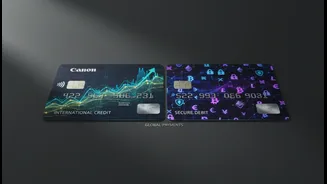
While the TCS changes are a relief, they don't eliminate all extra costs. The most significant one that often goes unnoticed is the foreign exchange (forex) mark-up fee. This is a charge levied by your bank or credit card issuer when you make a transaction in a foreign currency. It's not usually listed as a separate fee on your statement; instead, it's built into the exchange rate you are offered. Most Indian credit and debit cards charge a forex mark-up fee that typically ranges from 1.5% to as high as 3.5% of the transaction value, plus GST. So, for every ₹1,00,000 you spend, you could be paying an extra ₹1,500 to ₹3,500, completely separate from any TCS.
How the Costs Add Up in Practice
Let’s break it down with an example. Imagine you use your standard credit card to pay for hotels and shopping worth ₹2,00,000 during a trip to Europe. First, your bank will apply its forex mark-up. Assuming a 3.5% fee, that’s an immediate extra cost of ₹7,000 (3.5% of ₹2,00,000). You will also pay 18% GST on this fee, which adds another ₹1,260. So, your ₹2,00,000 spend actually costs you ₹2,08,260. In this scenario, your total spending is still well below the ₹10 lakh LRS threshold, so no TCS is applicable on these individual credit card spends. However, the forex mark-up alone has added over 4% to your costs. It is also important to note that international credit card usage while overseas is currently not subject to TCS until further notice from the government. However, loading a forex card or making direct bank transfers are subject to LRS rules.
Why This Matters for Your Travel Budget
A few percentage points might not sound like much, but they accumulate quickly. On a family vacation with a budget of ₹5,00,000, a 3.5% forex mark-up fee translates to an extra ₹17,500 in hidden charges, plus GST. That’s money that could have been used for another night's stay, a few nice meals, or souvenirs. For students paying university fees or individuals making larger remittances, these costs become even more substantial. The key takeaway is that while the government has eased the tax collection burden, the fees charged by financial institutions remain a critical factor in the total cost of your overseas spending. Being aware of these charges is the first step toward effectively managing your international travel budget.
Smart Strategies to Minimise Overseas Costs
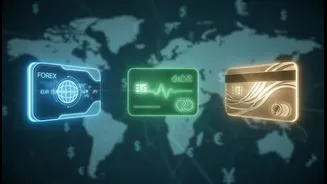
The good news is that with some planning, you can significantly reduce or even eliminate forex mark-up fees. Many banks in India now offer specialised travel credit cards with low or even zero forex mark-up. Cards like the RBL World Safari, Scapia Credit Card, and certain variants from IDFC FIRST Bank are designed for travellers and eliminate this fee entirely. Another excellent option is a multi-currency forex card. These are prepaid cards that you can load with foreign currency before you travel, often at better exchange rates and with lower mark-up fees compared to standard debit or credit cards. Finally, when paying with any card abroad, always decline the option of 'Dynamic Currency Conversion'—where the machine offers to charge you in Indian Rupees. While it seems convenient, this service often comes with very poor exchange rates and high hidden fees. Always choose to pay in the local currency.