



The Challenge of Urban Stargazing
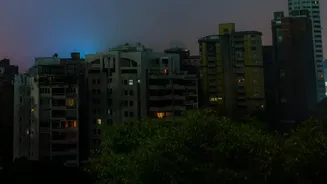
For anyone living in or near a major metropolitan area, the night sky is a pale imitation of its true self. Light pollution—the excessive and misdirected artificial light from buildings, streetlights, and cars—washes out all but the brightest celestial
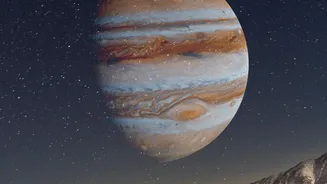
objects. This atmospheric glow can make it nearly impossible to distinguish a planet like Jupiter from a distant airplane or to trace the familiar shapes of constellations. It’s a common frustration that can make astronomy feel like an inaccessible hobby, reserved only for those with access to remote, dark-sky locations. While dedicated astronomers can use special filters and telescopes, the casual observer is often left pointing at a handful of bright dots, wondering what they’re missing.
Your Phone as a Pocket Planetarium
This is where your smartphone becomes an unexpectedly powerful astronomical tool. Stargazing apps transform your device into a portable, augmented-reality window to the cosmos. They work by combining data from several of your phone's built-in sensors. The GPS determines your exact location on Earth, the internal clock knows the precise time, and the compass and gyroscope track the direction and angle you're holding your phone. By cross-referencing this information with a vast catalogue of celestial objects, the app can generate an accurate map of the sky exactly as it appears above you, in real-time. When you point your phone at a bright light in the sky, the app overlays labels and information, instantly telling you if you’re looking at Venus, Mars, or a faraway star.
Top Apps to Pierce the City Haze
A crowded field of apps is available, but a few stand out for their user-friendly design and powerful features. Star Walk 2 is often recommended for beginners due to its beautiful graphics and intuitive augmented reality (AR) view that overlays constellation art onto the camera feed. Its free version is robust, making it a great starting point. SkyView Lite offers a similarly simple 'point-to-identify' experience and works well even without a Wi-Fi or data connection, which is perfect for finding a slightly darker park on the edge of town. It also includes reminders for celestial events like meteor showers. Stellarium Mobile is a favourite among enthusiasts for its highly realistic sky rendering and massive database of stars and deep-sky objects. While its interface is more minimalistic, it offers incredible depth and can even be configured to simulate the view through a telescope. Many of these apps also feature a red-light 'night mode' to preserve your night vision while you observe.
Tips for the Best Urban Viewing
While these apps can identify objects you can see, they can't make faint stars magically appear. To get the most out of your urban stargazing session, a little preparation goes a long way. First, find the darkest spot available. This might be a local park, a rooftop, or even just a side of your home that blocks direct streetlights. Second, give your eyes at least 15-20 minutes to adapt to the darkness; you'll be surprised by how many more stars become visible. Use the app's night mode to avoid ruining your adjusted vision with a bright white screen. Finally, manage your expectations. You won't see the Milky Way from the city centre, but you can absolutely identify the brightest planets, track the International Space Station (ISS) as it flies over, and learn the major constellations that form the backbone of our night sky.