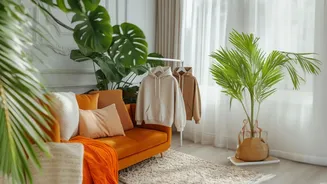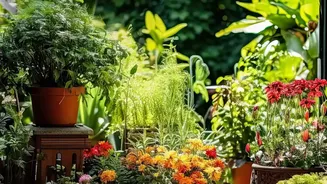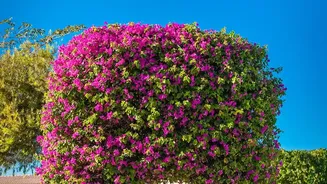



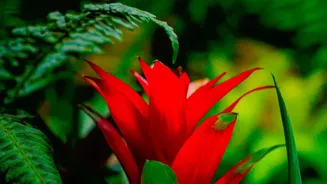
The dream of a lush, tropical garden is a popular one, evoking images of a dense, green paradise. While vibrant flowers play a role, the true secret to achieving this immersive style lies in the foliage itself—specifically, the artful use of leaf shapes.
The Foundation: Large, Bold Leaves
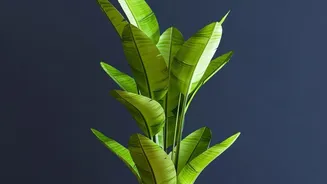
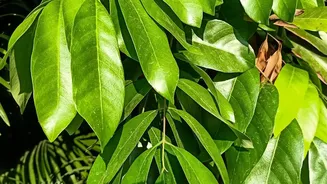
The fastest way to create a 'jungle' feel is with plants that have large, dramatic leaves. These are often called 'coarse textured' plants in garden design. Think of the giant, heart-shaped foliage of Elephant Ears (Alocasia and Colocasia) or the paddle-like leaves of the Bird of Paradise (Strelitzia). These plants act as the foundation of your tropical design, providing immediate visual weight and impact. Their massive surfaces catch the eye, create deep shadows, and trick the mind into perceiving the space as more verdant and wild than it is. A few well-placed plants with oversized foliage can do more to establish a tropical mood than dozens of smaller plants, serving as the structural backbone of the entire design.
The Contrast: Fine, Feathery Textures
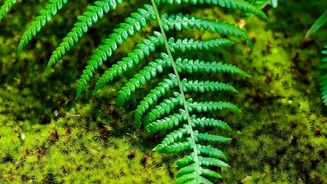
A garden filled only with large leaves would feel heavy and monotonous. To create balance and depth, you need to introduce contrasting textures. This is where fine-textured plants, like ferns and many palms, come in. Their delicate, feathery, or blade-like fronds break up the solidity of the coarse foliage. They add an element of softness and movement as the wind rustles through them. This contrast between bold and fine textures is a fundamental principle of landscape design; it makes both types of plants stand out more. Plants with fine foliage, such as Areca palms or Asparagus ferns, help unify the composition and make the garden feel fuller and more layered.
The Detail: Intricate and Unusual Shapes
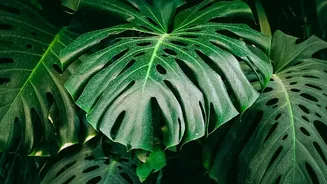
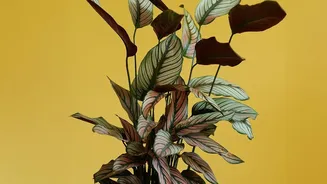
Once the foundational layers of bold and fine textures are in place, the next step is to add plants with unique and intricate leaf shapes. These are the 'fancy' leaves that draw you in for a closer look. The most iconic example is the Monstera deliciosa, famous for the natural splits and holes (fenestrations) in its leaves. Other plants, like Philodendrons with their heart-shaped leaves or Calatheas with their painterly patterns, add another layer of visual interest. These plants prevent the design from feeling flat. They introduce complexity and serve as focal points within the broader green tapestry, rewarding observers who take the time to notice the details.
The Technique: Building in Layers
A successful tropical garden mimics the structure of a real rainforest, which is built in vertical layers. This is perhaps the most crucial technique for achieving a lush style. Start with the tallest plants, like palms or banana trees, to form a 'canopy' layer at the back of a garden bed. Below that, add your mid-layer of shrubs and bold-leafed plants like Philodendrons and Alocasias. Finally, fill in the foreground with low-growing ground covers and smaller plants like ferns or Mondo grass to create the 'lower layer'. This layering of different heights and forms creates a sense of density and immersion, drawing the eye through the space and making the garden feel like a private, enclosed sanctuary.