
Our Brilliant Neighbour, The Evening Star
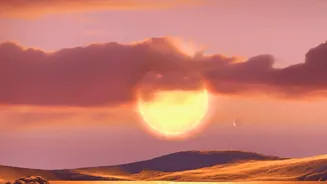
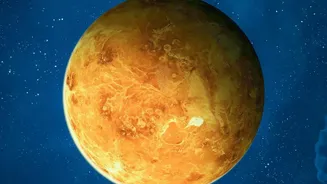
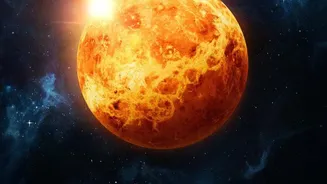
Throughout August 2026, Venus will shine as a magnificent 'Evening Star'. You won't be able to miss it; the planet will be exceptionally bright, easily outshining every other star in the sky. This brilliance is due to its thick, highly reflective cloud
cover and its relative proximity to Earth. It will be visible in the western sky shortly after sunset, a radiant beacon piercing the twilight. The planet will be so prominent that it will be an easy and rewarding sight for both seasoned stargazers and curious beginners looking for their first astronomical adventure.
When and Where to Look
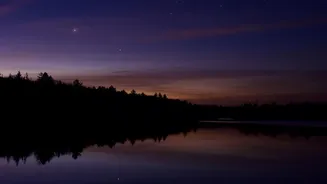
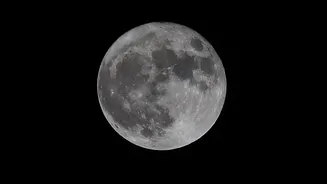
For the entire month of August, the time to watch is just after sunset. Look towards the western horizon as the sun's glow fades. Venus will appear as a stunningly bright, steady point of light. A particularly special period will be around August 14th and 15th. During these evenings, Venus reaches its 'greatest elongation', meaning it will be at its farthest apparent distance from the sun in the sky, making it easier to see in the darkening twilight. As an added bonus, a beautiful crescent Moon will appear near Venus on these nights, creating a breathtaking celestial pairing. The planet will be traversing the constellation of Virgo, and you might also spot the bright star Spica nearby.
A Step-By-Step Viewing Guide
Finding Venus requires no special equipment, just your eyes and a little patience. First, find a location with a clear view of the western horizon. This could be a local park, a rooftop, or even an upper-floor window with an unobstructed view. About 30 to 45 minutes after sunset is the prime viewing window. As the sky darkens, scan the western quadrant. Venus will be the first and brightest point of light to emerge. Its light is steady and does not twinkle like distant stars, which can help you confirm your sighting. For those in urban areas, moving away from the direct glare of streetlights will significantly improve your view. Allow your eyes about 15 to 20 minutes to adjust to the darkness for the best experience.
Do You Need a Telescope?
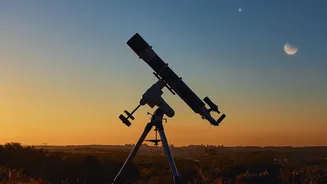
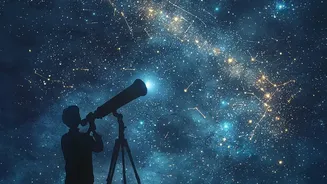
While Venus is a spectacular naked-eye object, binoculars or a small telescope can reveal even more fascinating details. Throughout August, Venus will be in a crescent phase, similar to our Moon. A telescope will allow you to see this shape clearly. You’ll notice the planet's disk appears to get larger while the crescent gets thinner as it gets closer to Earth during its orbit. On August 11th and 12th, the planet is predicted to be at 'dichotomy', or exactly half-lit, appearing like a tiny quarter moon through a telescope. This provides a wonderful opportunity to observe the dynamic nature of our solar system from your own backyard.
Tips for an Unforgettable Experience
To make the most of your Venus watch, planning is key. The winter months generally offer the clearest skies in many parts of India, but late summer can still provide good viewing opportunities if the monsoon has subsided. Consider finding a spot away from the heavy light pollution of major city centres for a truly dark sky. Locations like the Rann of Kutch or high-altitude spots in Ladakh are famous for their pristine skies, but even a trip to the outskirts of your city can make a huge difference. You can also use stargazing apps on your smartphone, which use your location to create a real-time map of the sky, pointing you directly to Venus and other celestial objects.