






The Global Hunt for Tomorrow's Resources
Critical minerals are the silent engines of the modern world. This group of elements, which includes lithium, cobalt, nickel, and various rare earths, forms the bedrock of high-tech manufacturing, clean energy, and national defence. India has identified
30 such minerals as vital to its economic and security ambitions. The challenge is that India is almost entirely dependent on imports for the most crucial of these, such as lithium and cobalt. This dependency creates a significant strategic vulnerability, leaving the nation's supply chains exposed to geopolitical tensions and price volatility, much like the oil crises of the past.
India's Strategic Imperative for 'Urban Mining'
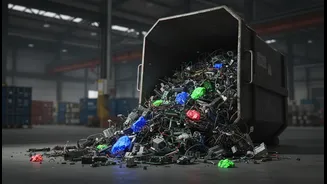
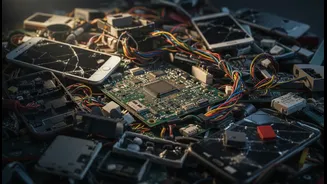
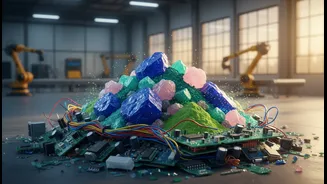
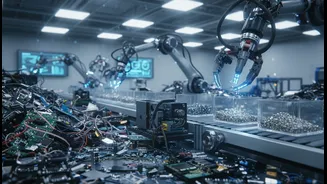
To counter this dependency, India is increasingly looking inward—not at traditional mines, but at its mountains of electronic waste. This strategy, known as 'urban mining', involves recovering valuable minerals from discarded smartphones, laptops, and batteries. The logic is compelling: why import what you can harvest from your own backyard? With millions of tons of e-waste generated annually, India possesses a vast, untapped domestic resource. Developing a circular economy, where these materials are recovered and reused, is central to achieving self-reliance (Atmanirbhar Bharat), powering the green transition, and strengthening national security.
Where Ambition Meets Economic Reality
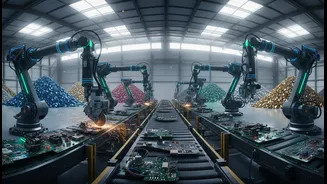
While the promise of urban mining is immense, the reality is constrained by difficult economics. Setting up formal recycling facilities with advanced, environmentally safe technology requires huge capital investment. The cost to establish a mid-sized lithium-ion battery recycling plant, for instance, can run into millions of dollars. Furthermore, the concentration of minerals in e-waste is often low, and the complex, hazardous processes needed for extraction make recovery rates inefficient without sophisticated technology. This makes it difficult for formal recyclers to compete on cost.
The Challenge of the Informal Sector
The economic puzzle is complicated by the dominance of India's informal recycling sector. An estimated 90-95% of e-waste is handled by unregulated operators, from 'kabadiwalas' to small workshops. This sector is highly efficient at collection and provides livelihoods for many, but often uses crude and dangerous methods like open-air burning and acid baths to extract materials. These practices result in low recovery rates for critical minerals and release toxic pollutants. Formal recyclers struggle to compete with the low operational costs of the informal sector, which doesn't bear the expense of proper safety and environmental controls.
Forging a Path Forward
The government is trying to level the playing field. Policies like the E-Waste Management Rules and the National Critical Minerals Mission aim to formalise the industry through Extended Producer Responsibility (EPR), which makes manufacturers accountable for their products' end-of-life management. These rules mandate recycling targets and are designed to direct the flow of waste towards authorised facilities. However, enforcement remains a challenge, and some manufacturers have contested the costs involved. The path forward likely requires a hybrid approach: providing financial incentives and technological support to formal recyclers, while simultaneously finding ways to integrate and upgrade the informal sector's vast collection network, improving safety and efficiency.