





The High-Altitude Challenge
For years, travellers to Ladakh have known the familiar sight of a crowded Leh airport. As the primary air gateway to a region that is cut off by road for several months, the existing terminal has been straining under the pressure of soaring tourist numbers
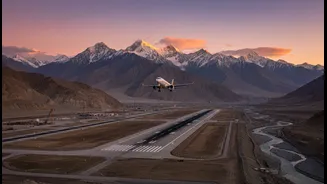
and strategic needs. The current airport handles a significant number of passengers annually, but during peak season, long queues and packed halls become the norm, creating bottlenecks at one of the world's highest commercial airfields. With flight operations often restricted to the morning hours due to strong afternoon winds, the need for a larger, more efficient facility has become critical. Recent increases in daily flights have provided some relief, but the underlying infrastructure has been overdue for a major overhaul.
A Vision for the Future: The New Terminal
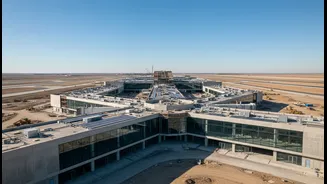
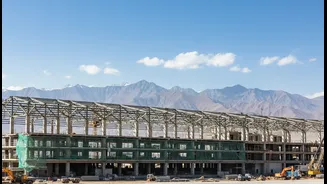
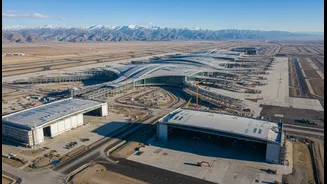
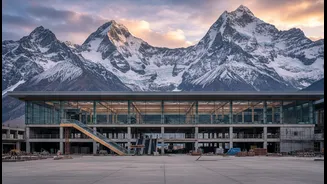
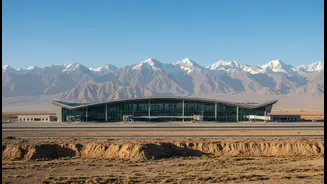
The answer to these challenges is a new integrated terminal building, a project that is now 83% physically complete as of early July 2026. According to the Ministry of Civil Aviation, this modern facility is designed to significantly enhance air connectivity. Once operational, it will be able to handle up to 54 flights a day, which is nearly three times the airport's current capacity. The project, with an estimated cost of around Rs 480-640 crore, is poised to transform the passenger experience, with the ability to serve up to 3.5 million passengers annually. This represents a massive leap from the current capacity, which is just over nine lakh passengers per year.
Sustainable Design Meets Cultural Heritage
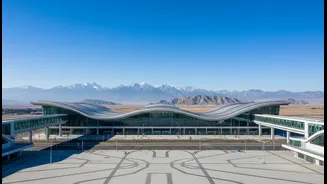
More than just an expansion, the new terminal is an engineering marvel designed for its unique environment. It is set to be India’s first airport terminal powered by a hybrid of geothermal and solar energy. A pioneering geothermal system will provide heating and cooling, a crucial feature in a region with extreme temperatures, drastically reducing the airport's carbon footprint. The architectural design pays homage to Ladakhi culture, with a look and feel that reflects ancient Buddhist wisdom intertwined with modern aesthetics. Spread across approximately 19,000 square metres, the building will feature 18-20 check-in counters, modern baggage handling systems, and ample space to ensure a smooth flow of travellers.
Boosting Tourism and the Local Economy
The impact of this project extends far beyond the airport's perimeter. Enhanced connectivity is expected to provide a major boost to Ladakh’s tourism sector, which forms the backbone of the local economy. By easing travel bottlenecks, the new terminal will make the region more accessible for year-round tourism, supporting hotels, tour operators, and local businesses that have previously faced slowdowns. The ability to handle more flights and passengers efficiently will likely restore confidence and drive economic activity, providing a stable source of livelihood for many in the region. The development is a key part of the government's broader push to modernise aviation infrastructure across the country.
Strengthening a Strategic Gateway
Beyond its commercial and tourism benefits, the upgraded Leh airport holds immense strategic importance. As a dual-purpose civilian and military hub, improved infrastructure ensures more reliable and efficient logistics for the Indian Armed Forces in this sensitive border region. The expansion includes plans for new aircraft bays, which will be constructed after the old terminal is demolished, further increasing operational capacity for both civil and military movements. This enhanced capability strengthens a vital link to a remote but critical part of the country, ensuring it remains well-connected regardless of the season.