







A Mid-Air Security Scare
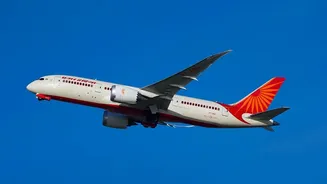
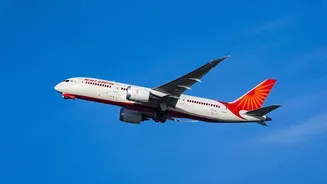
On the morning of October 14, while flying over Indian airspace, Air India flight AI2030 from Frankfurt to Delhi became the subject of a high-stakes security alert. Air traffic controllers received a 'Squawk 7500' signal from the aircraft, an internationally
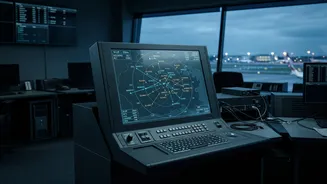
recognised transponder code for unlawful interference or hijacking. This signal, even if transmitted for just a few seconds, automatically triggers a serious and immediate response from ground control and security agencies. While some initial reports mentioned a bomb threat, authorities later clarified the response was primarily due to the hijack code. The pilots themselves reportedly communicated to air traffic control that everything on board was normal, creating confusion that investigators are now tasked with unravelling.
Immediate Diversion and Protocol
Upon receiving the alert while the Boeing 787-9 Dreamliner was in the Mumbai Flight Information Region, authorities wasted no time. A decision was made in the Delhi airport's war room to divert the aircraft as a precaution. The nearest suitable airport, Jaipur International Airport, was instructed to prepare for an emergency landing. This decisive action is part of a standard operating procedure designed to prioritise passenger safety above all else, isolating a potential threat away from a more congested airport like Delhi. The flight landed safely in Jaipur at approximately 9:35 AM and was immediately escorted by security vehicles to a designated isolation bay, away from the main terminal and other aircraft.
Passengers Recount the Ordeal
On board, passengers were initially told the diversion was for 'security reasons'. For the 293 passengers and 13 crew members, confusion turned to concern upon landing. Seeing firefighters and a heavy security presence on the tarmac, some speculated there had been an engine failure. Passengers remained inside the aircraft for at least two hours after it landed before being deplaned in phases under security supervision. They were then moved to a holding area in the terminal while a thorough security operation commenced. This involved multiple agencies, including the Central Industrial Security Force (CISF), local police, and a Bomb Detection and Disposal Squad, who meticulously searched the aircraft, passenger luggage, and cargo holds.
The Alert is Declared False
After hours of exhaustive checks, security agencies found nothing suspicious. The alert was officially declared false. With the aircraft cleared, passengers, who had to undergo another round of security screening, were allowed to re-board. Air India stated that a 'perceived security concern' led to the diversion and that its teams worked with authorities to minimise the disruption. The flight finally departed from Jaipur and landed at its original destination, Delhi, around 3:15 PM, more than five hours behind schedule. The incident caused significant delays but ultimately ended without harm to any passengers or crew.
Investigation into the Cause
With the immediate threat resolved, the focus has shifted to determining the cause of the false alarm. India's aviation regulator, the Directorate General of Civil Aviation (DGCA), has launched a formal investigation. Early indications from airport officials suggested the pilot might have activated the hijack code by mistake. However, other reports indicate the pilots denied sending the signal, leading investigators to also examine the possibility of a technical glitch or a malfunction in the air traffic control radar system that received the alert. The probe aims to establish precisely how the alert was triggered to prevent similar incidents, which, while ensuring safety, cause significant disruption and anxiety.