




A New Era of Lunar Ambition
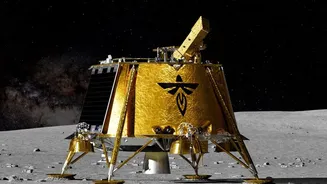
The Moon is busier than it has been in decades. NASA's Artemis program aims to establish a long-term human presence, while nations like China and India are expanding their own lunar footprints. Private companies are also joining the fray, planning to deliver
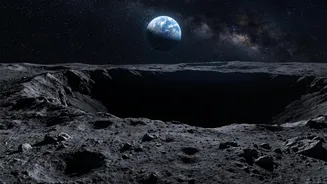
scientific instruments and commercial payloads to the surface. This flurry of activity is focused heavily on the Moon's south pole, a region believed to hold vast reserves of water ice in craters that have been dark and frozen for billions of years. This ice is not just a potential resource for future astronauts; it is a pristine scientific archive that could hold clues to the origins of our solar system. However, the very act of exploring these sites threatens to corrupt them forever.
The Problem of Planetary Protection
The principle of planetary protection, enshrined in the 1967 Outer Space Treaty, requires space-faring nations to avoid the "harmful contamination" of celestial bodies. This is managed through international guidelines from the Committee on Space Research (COSPAR). For years, the Moon was considered a low-risk environment—a dead, dry world where Earthly microbes couldn't survive. Robotic missions could be sterilized by baking them at high temperatures, a method impossible for crewed spacecraft. But recent discoveries of water ice and new research on microbial survivability have changed the equation. The very places we most want to study are now seen as potential havens for our own microscopic hitchhikers.
Earth's Toughest Travelers
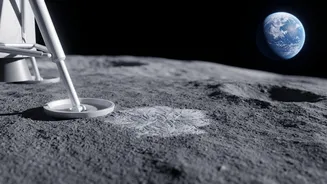
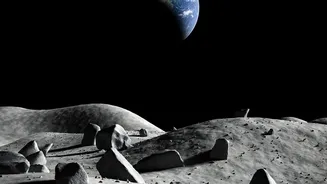
Humans are walking, talking ecosystems, carrying millions of bacteria on every patch of skin. These microbes inevitably escape from spacesuits and habitats. A recent NASA-led study published in August 2026 found that some common Earth microbes could survive, at least temporarily, in the cold, shadowed conditions near the lunar poles. While they may not grow or reproduce without liquid water, they can enter a dormant state. The terrain itself offers protection, with craters, ridges, and even something as small as an astronaut's bootprint creating tiny niches shielded from the Sun's harsh ultraviolet radiation. This means that contamination is not just possible, but likely unavoidable without new strategies.
What's at Stake for Science?
The primary concern is scientific integrity. The permanently shadowed regions (PSRs) at the lunar poles are invaluable time capsules. The ice within them could contain ancient organic molecules delivered by comets and asteroids, offering a glimpse into the raw ingredients that may have led to life on Earth. If we introduce our own microbes and organic material, we risk confusing our own biological signatures with what might be native to the Moon. This would compromise our ability to answer fundamental questions about the solar system's history and the origins of life. The contamination is not just biological; even rocket exhaust from landers could spread chemicals like methane across the lunar surface, polluting these pristine ice deposits.
The Search for a Solution
The scientific community is now in a race to update its protocols. In response to new findings, COSPAR has already updated its planetary protection policy for the Moon, designating polar regions containing these shadowed craters as areas requiring stricter precautions. Researchers are calling for a more careful approach, suggesting that we need to document exactly what we bring with us to be able to distinguish it from any native lunar chemistry later on. The debate highlights a central tension in modern space exploration: the drive for rapid commercial and national expansion versus the slower, more deliberate pace required to preserve irreplaceable scientific sites. Striking the right balance will be critical to ensuring that our return to the Moon enriches our understanding of the cosmos, rather than clouding it with our own reflection.