

A Treasure from the Hidden Side
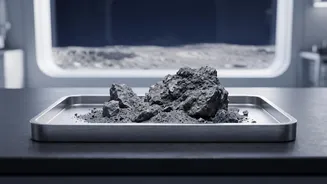
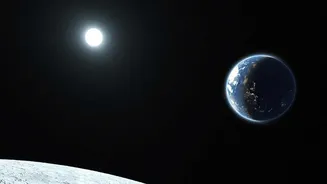
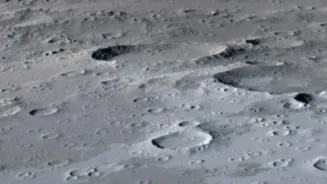
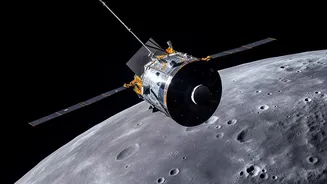
In a historic first, China's Chang'e-6 mission successfully landed in the vast South Pole-Aitken (SPA) Basin on the lunar far side in 2024 and returned with nearly two kilograms of precious soil and rock. For decades, our entire understanding of the Moon's
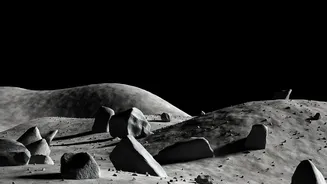
geology was based on samples from the near side, collected by the Apollo and other missions. It was like trying to understand a whole world by only visiting one continent. These new samples offer the first direct look at the composition and history of a completely different lunar province, one that appears starkly different from the familiar face of the Moon. The landing site within the Apollo Basin, a large crater inside the even larger SPA Basin, was strategically chosen to provide clues about the Moon's biggest and oldest impact structure.
The Fiery Secrets Within the Dust
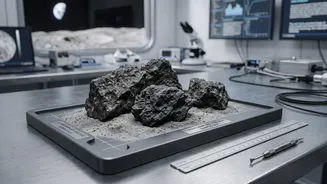
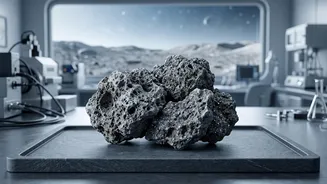
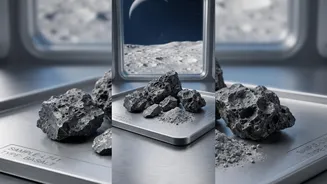
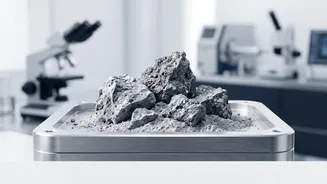
When scientists began analyzing the samples, they found exactly what they were hoping for: fragments of basalt, a type of dark volcanic rock. Using radioisotope dating techniques, they determined the age of these rocky fragments. The results were stunning. The studies, published in top scientific journals, confirmed that the far side was volcanically active. Most of the basalt fragments dated to about 2.8 billion years old, with one remarkable piece dating back a staggering 4.2 billion years—the oldest known lunar basalt sample ever brought to Earth. This confirmed that volcanoes were erupting on the far side for at least 1.4 billion years, a much more dynamic and fiery past than some models had predicted.
Unravelling a Lunar Puzzle
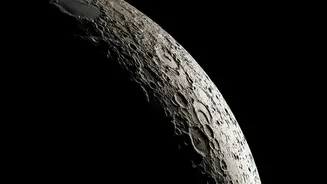
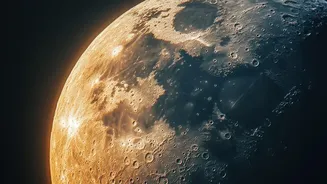
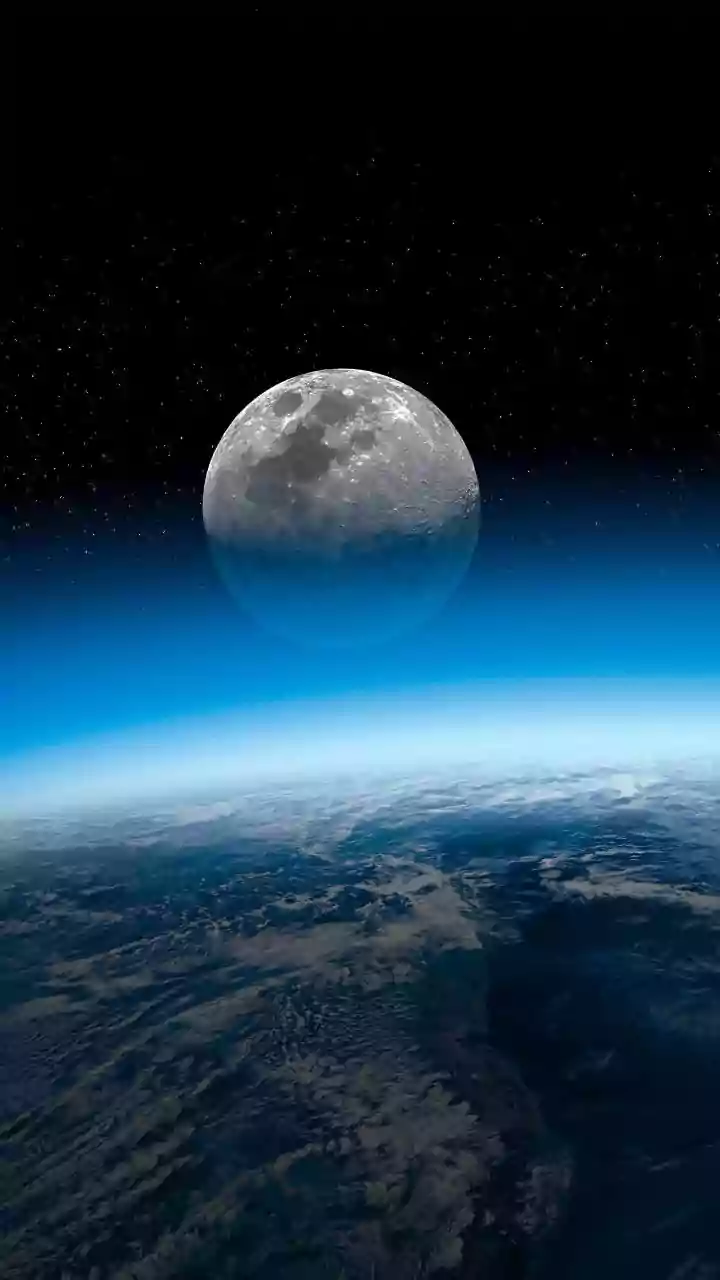
This discovery helps solve a long-standing lunar puzzle. The Moon's two halves are dramatically different; the near side is covered in vast, dark plains of ancient lava flows, while the far side is more heavily cratered with a thicker crust and far fewer volcanic plains. Scientists had long theorized why this was, with one leading idea being that a thinner crust on the near side made it easier for magma to reach the surface. The Chang'e-6 findings prove that magma did indeed erupt on the far side, but perhaps less voluminously. The age of the samples, around 2.8 billion years, shows that volcanism was happening more recently than many expected in this region, which was previously thought to have cooled down much earlier. This extended volcanic activity on a 'younger' Moon reshapes our timeline of its thermal evolution.
Rethinking the Moon's Formation
The composition of the magma itself also held surprises. The far side basalts were found to be low in what scientists call KREEP—an acronym for rock rich in potassium (K), rare-earth elements (REE), and phosphorus (P). On the near side, KREEP is more abundant, and the decay of its radioactive elements is thought to have provided the extra heat that powered volcanism for longer. The fact that the far side sustained volcanic activity for so long without this KREEP heat source is a major new mystery for scientists to solve. Furthermore, the research provides strong support for the 'lunar magma ocean' hypothesis—the idea that the Moon was once covered in a global sea of molten rock shortly after its formation. The similarity in basalt composition between the near and far sides points to a common, globe-spanning mantle source.