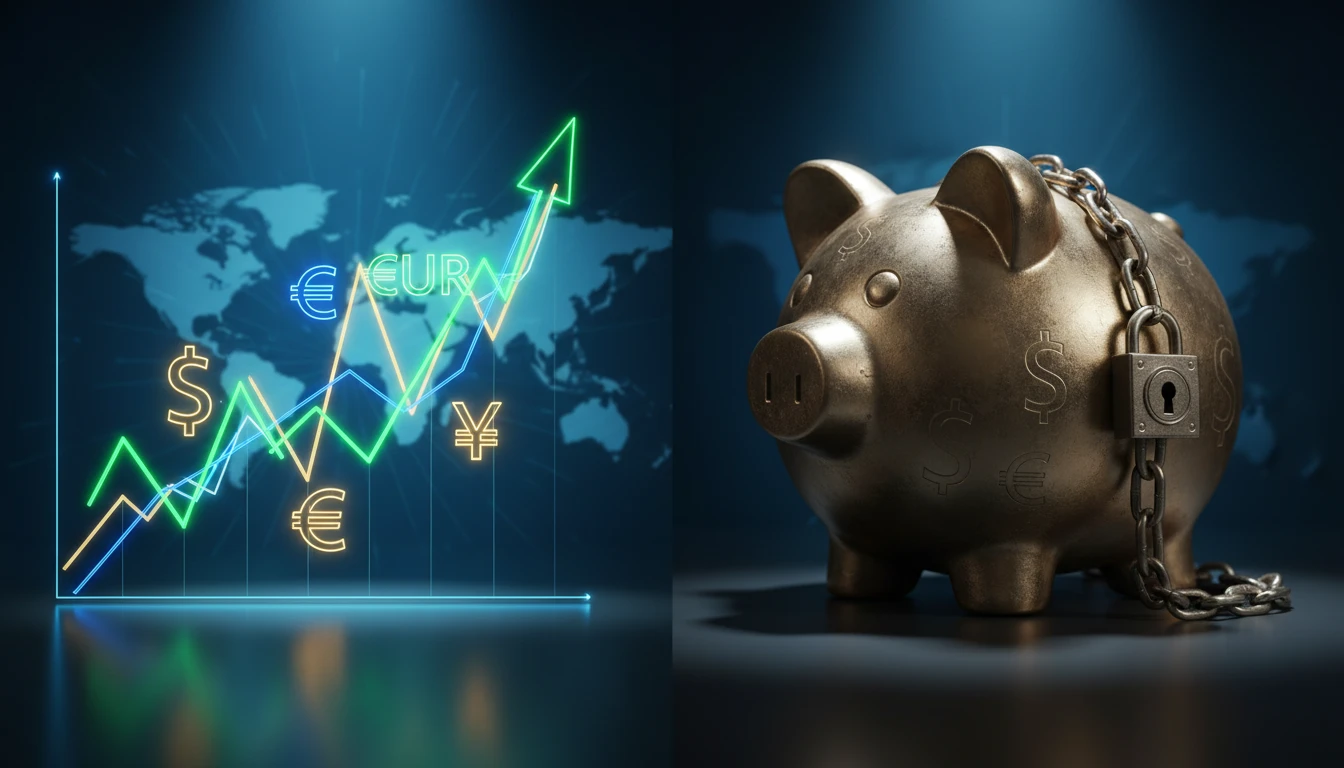









The Global Domino Effect Explained
It might seem strange that a decision made by the US Federal Reserve (the ‘Fed’), America's central bank, could affect your education loan from a bank in India, but it's a clear financial chain reaction. When the Fed raises its interest rates to manage
the US economy, it makes investing in the US more attractive. Global investors often pull money out of emerging markets like India to get these safer, higher returns. To prevent a large-scale outflow of capital and to stabilise the Indian rupee, the Reserve Bank of India (RBI) often responds by increasing its own key interest rate, known as the repo rate. The repo rate is the rate at which the RBI lends money to commercial banks in India. If it becomes more expensive for your bank to borrow money, they pass that cost on to you, the customer, through higher interest rates on loans, including education loans.
Floating vs. Fixed Rates: Your Critical Choice
This is where the type of loan you choose becomes crucial. Most education loans in India come with a ‘floating’ interest rate. This rate is made of two parts: a variable benchmark rate (like the MCLR or RLLR) and a fixed 'spread' or margin set by the bank. Since this benchmark is linked to the RBI's repo rate, your loan’s interest rate can go up or down over time. If you take a floating rate loan during a period of rising global rates, your Equated Monthly Instalments (EMIs) could increase significantly over your loan tenure. A ‘fixed’ rate loan, on the other hand, locks in an interest rate for the entire loan period. This offers predictability and protects you from future rate hikes, but it might come with a slightly higher starting interest rate. Understanding which type of loan you are being offered is the first step to managing this risk.
What Should You Be Watching?
You don't need to become a financial expert, but knowing what to look for can save you a lot of money. Keep an eye on announcements from two key institutions: the US Federal Reserve's Federal Open Market Committee (FOMC) and the RBI's Monetary Policy Committee (MPC). These committees meet regularly to decide on interest rates. Financial news outlets will extensively cover their decisions and, more importantly, their 'guidance'—hints about future rate movements. If the commentary suggests that inflation is a concern and rates are likely to rise, it signals that the cost of borrowing could soon increase. Conversely, if they signal rate cuts are on the horizon, it might be wise to wait or choose a floating rate loan that will benefit from the decrease.
Timing Your Loan in a Shifting Market
So, what does this mean for your application? It's all about timing and strategy. If experts predict a series of interest rate hikes globally and in India, you might want to act quickly to secure a loan, preferably a fixed-rate one, before the rates climb higher. This locks in your cost and gives you financial certainty. If the general sentiment is that rates are at their peak and are expected to fall, you might benefit from a floating rate loan, as your EMIs would decrease when the RBI eventually cuts its repo rate. Some students even take a hybrid approach, starting with one type and refinancing later, but this involves its own costs and complexities. The key is to be aware of the trend. In the current economic climate of mid-2026, with inflation still a global concern, central banks are proceeding cautiously.
Don't Forget the Rupee's Role
Beyond interest rates, global economic shifts also affect currency exchange rates, another critical factor for overseas education. A period of capital outflow, often triggered by rising US interest rates, can weaken the Indian rupee against the US dollar. If you've taken a loan in rupees to pay fees in dollars, a weaker rupee means you'll need more rupees to cover the same dollar amount. This can dramatically increase the total cost of your education and the size of the loan you ultimately need. When planning your budget, always factor in a buffer for currency fluctuations, as this can be just as impactful as a change in interest rates.