





A New Era For Overnight Journeys
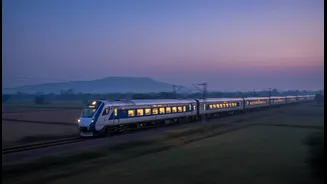
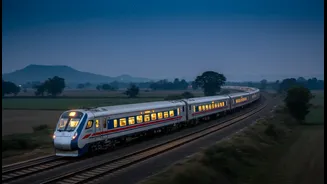
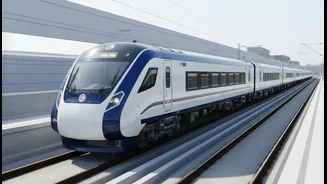
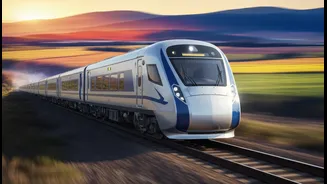
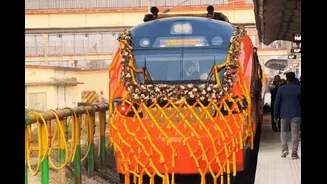
Indian Railways is expanding its premier Vande Bharat brand into the lucrative overnight travel market. The first service, launched in January 2026, connects Howrah and Kamakhya. Now, a second route is operational. As of July 17, 2026, the Sant Ravidas
Express connects Varanasi with Chheharta (Amritsar), a major corridor linking Uttar Pradesh and Punjab. This isn't just another train launch; it represents a significant strategic step. These self-propelled trainsets, which don't require a separate locomotive, are designed to be faster, more efficient, and offer a completely modern passenger experience compared to the legacy trains that have dominated these routes for decades. The new service runs three times a week in each direction, targeting the dense traffic of pilgrims, business travellers, and families on this popular route.
What 'Premium Convenience' Really Means
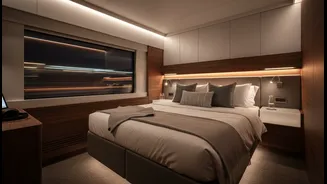
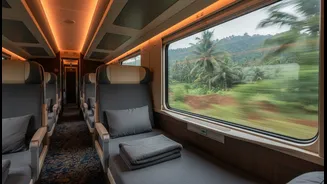
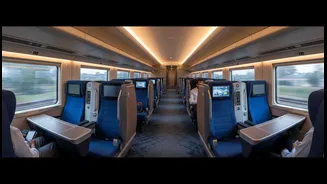
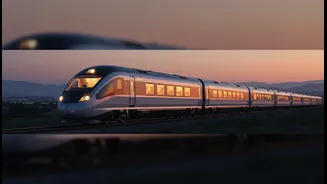
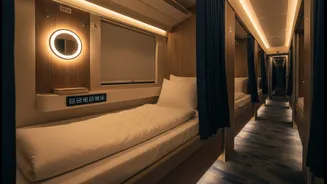
The Sleeper Vande Bharat is being positioned as a direct competitor to the Rajdhani Express, but with a host of modern upgrades. The 16-coach train, comprising First, Second, and Third AC classes, can hold over 820 passengers. The improvements are noticeable. Berths are ergonomically designed with better cushioning. Instead of challenging vertical ladders, the design incorporates more user-friendly steps to access upper berths. Ambient lighting, sensor-activated taps in washrooms, and bio-vacuum toilets similar to those in aircraft aim to elevate the standard of hygiene and comfort. Fully sealed gangways between coaches reduce noise and keep the interiors dust-free, while an advanced suspension system promises a smoother ride. Safety has also been enhanced, with the indigenous Kavach anti-collision system and superior fire safety standards built into the design.
The Rajdhani Rivalry: How It Compares
For decades, the Rajdhani Express has been the gold standard for premium long-distance train travel in India. The Vande Bharat sleeper aims to dethrone it. The most significant advantage is speed and efficiency. Thanks to its distributed power system, the Vande Bharat accelerates and decelerates much faster, reducing overall journey time. While Rajdhani trains can reach speeds of 140 km/h on certain stretches, Vande Bharat sleepers are designed for 160 km/h, though they operate at a maximum of 130 km/h on most current routes for safety reasons. Another key difference is the booking system. Vande Bharat sleepers do not issue Reservation Against Cancellation (RAC) or waitlisted tickets; only confirmed berths are sold. This guarantees a berth for every ticketed passenger but eliminates the chance of getting on a full train at the last minute, a common practice on other services.
Breaking Down the Higher Fare
This enhanced experience comes at a cost. Fares for the Vande Bharat sleeper are marginally higher than those for Rajdhani trains. The pricing is calculated on a per-kilometre basis: roughly Rs 2.4/km for 3AC, Rs 3.1/km for 2AC, and Rs 3.8/km for 1AC, before GST. For comparison, a CSMT Rajdhani on the Delhi-Mumbai route charges around Rs 2.1/km for 3AC. There's also a minimum chargeable distance of 400 kilometres, meaning even short journeys will incur a base fare starting from Rs 960 for a 3AC ticket. This pricing positions the Vande Bharat as a distinctly premium service, aimed at passengers willing to pay more for a guaranteed, more comfortable, and slightly faster journey. The strategy is clear: create a new tier of rail travel that sits comfortably between conventional trains and air travel.
The Future of Indian Rail Travel
The introduction of sleeper Vande Bharat trains is more than just a hardware upgrade; it's a window into the future strategy of Indian Railways. The focus is shifting towards creating high-value, high-comfort services for a growing middle class. This push for state-built premium trains has also effectively sidelined earlier plans for privatising routes, with the government opting to develop its own modern fleet. However, this raises important questions. As Indian Railways invests heavily in its premium offerings, there are concerns about whether enough is being done to address overcrowding and improve services for the millions who rely on more affordable, non-AC travel. The launch of Amrit Bharat trains aims to cater to this segment, but the Vande Bharat is clearly the flagship project. The success of these sleeper trains will be a crucial test case, determining if a tiered system of rail travel can successfully serve the diverse needs of the Indian population.