





As winter arrives, the combination of cold outdoor air and dry indoor heat can leave hair feeling brittle, dull, and prone to breakage. Protecting your strands becomes essential, and it starts with two simple strategies.
Understanding the Winter Hair Challenge
Winter poses a dual threat to hair
health. The cold air outside has very little moisture, which can pull hydration directly from your hair shaft. This lack of humidity causes the hair's protective outer layer, the cuticle, to lift, leading to a rougher texture, frizz, and increased tangling. Then, you step inside to the welcome warmth of indoor heating, which only makes the air drier, further stripping moisture from your hair and scalp. This constant cycle of moving between cold, dry outdoor air and warm, dry indoor environments causes the hair fiber to repeatedly contract and expand, weakening its structure and making it more susceptible to breakage.
Why Heat Tools Amplify Winter Damage
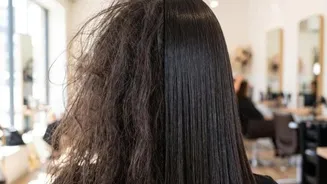
Reaching for a blow dryer, flat iron, or curling wand on an already vulnerable strand of hair is like adding fuel to the fire. Heat styling tools work by using high temperatures to reshape your hair, but in the process, they strip away its natural moisture. When hair is already dehydrated from the winter air, this effect is magnified. The intense heat can cause the water inside the hair shaft to turn to steam, damaging the structural proteins like keratin that give hair its strength and elasticity. The result is hair that is not only dry but also brittle, with more split ends and a dull appearance because the damaged cuticle can no longer lie flat to reflect light.
The Power of Protective Styling
This is where protective styles become your hair’s best friend. A protective style is any hairdo that tucks away the ends of your hair, which are the oldest and most fragile part of the strand. By keeping your ends shielded, these styles minimize daily manipulation from brushing and combing, reduce friction against clothing like woollen scarves and collars, and protect the hair from the harsh, dry environment. This gives your hair a much-needed break, allowing it to retain moisture and length more effectively. The goal isn't necessarily to accelerate hair growth, but to prevent the breakage that cancels it out.
Choosing Your Winter Shield
The best protective style is one that works for your hair type and doesn't put too much tension on your scalp or edges. Loose braids, twists, and buns are excellent, low-manipulation options that keep hair contained without causing stress. For those with textured hair, styles like box braids, cornrows, or faux locs can be fantastic longterm options, provided they are installed carefully to avoid excessive tightness. Even a simple, loose ballerina bun or a neatly tuckedaway braid can make a significant difference in shielding your hair from daily wear and tear. The key is to keep the style relaxed and comfortable.
Essential Habits for Healthy Winter Hair
Beyond limiting heat and adopting protective styles, a few other habits can boost your hair's resilience. Focus on hydration by using moisturizing shampoos and conditioners, and consider incorporating a weekly deep conditioning treatment or hair mask to replenish lost moisture. Applying a few drops of a nourishing oil, such as coconut or argan oil, to your ends can help seal the cuticle and add a protective barrier. When you do wash your hair, use lukewarm water instead of hot, as high temperatures can strip natural oils. Finally, consider sleeping on a satin or silk pillowcase to reduce friction and prevent breakage while you sleep.