





Beyond the Banks of the Vaigai
For years, the word 'Keeladi' has been synonymous with a groundbreaking chapter in Tamil history. The discoveries on the banks of the Vaigai river pushed the timeline of the Sangam Age back to at least the 6th century BCE, revealing a sophisticated, literate,
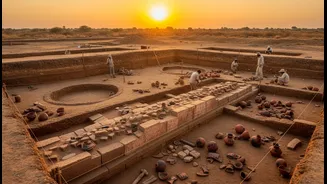
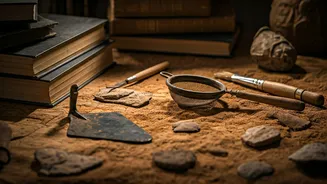
and thriving urban civilisation. But the story is no longer confined to this single, iconic site. The Tamil Nadu State Department of Archaeology (TNSDA) has embarked on an ambitious, state-wide project, launching excavations at numerous locations, each adding a new piece to the puzzle of the past. In March 2026, the Archaeological Survey of India (ASI) approved digging at eight key sites, allowing for the most extensive archaeological work in the state in over six decades. This expansion signals a concerted effort to move beyond a single-site focus and build a more comprehensive narrative of early Tamil society.
New Sites, Deeper Histories
The new map of discovery spans the length and breadth of the state. Near Tenkasi, at Karivalamvanthanallur, archaeologists recently unearthed the first-ever brick stepwell from the early historic period in Tamil Nadu. This find, located on an ancient trade route, points to advanced water management systems and is complemented by the discovery of high-tin bronze objects, previously only found at a handful of other sites like Adichanallur. Meanwhile, at Porpanaikottai in Pudukkottai district, a Sangam-age fort is believed to have existed. Excavations have revealed a unique circular brick structure from the Iron Age, thousands of antiquities including gold pieces, copper nails, and tools possibly used for weaving. At Vembakottai in Virudhunagar district, successive phases of excavation have unearthed over 10,000 artifacts, including shell bangles, terracotta medals, and evidence suggesting it was an industrial site for bead-making and shell ornaments over 2,000 years ago. These sites are not isolated dots on a map; they are interconnected hubs of industry, trade, and settlement.
Challenging and Enriching Narratives
Each discovery contributes to a richer, more nuanced understanding of ancient Tamil life. The findings are challenging long-held assumptions about the timeline of urbanisation and technological development in South India. For instance, scientific dating of artifacts from Sivagalai has suggested that iron technology was in use in the region as far back as the 4th millennium BCE, pushing the Iron Age in Tamil Nadu back by over a millennium. The consistent discovery of graffiti marks, considered precursors to the Tamil-Brahmi script, alongside evidence of industrial production and robust trade links with places as far as Rome, paints a picture of a literate and economically dynamic society. The government's investment and use of modern scientific methods like DNA analysis and optically stimulated luminescence (OSL) dating are adding new layers of certainty to these claims. This isn't just about digging up artifacts; it's about scientifically reconstructing a lost world.
A Story Still Being Written
The expansion of archaeological work is a conscious effort to “rewrite” India's history from a Tamil perspective, backed by scientific evidence. The sheer number of sites now under investigation—including Keeladi and its clusters, Adichanallur, Vellalore, and new locations like Chennanur and Marungur—demonstrates a seismic shift in historical inquiry. These digs are expected to shed light on everything from Iron Age burial practices and Neolithic settlements to the maritime trade of the Cholas. While political debates sometimes surround the interpretation and recognition of these findings, the ground itself tells an undeniable story of antiquity and sophistication. The evidence emerging from across the state suggests that Keeladi was not an anomaly but part of a widespread, advanced civilization.