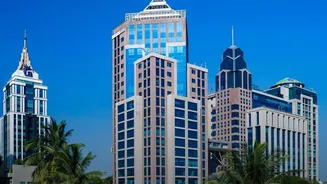







The Undisputed Reign of India's Silicon Valley
For years, the career path for an ambitious software engineer, product manager, or startup founder in India pointed to one destination: Bengaluru. The city built an unparalleled ecosystem of engineering talent, venture capital, and a dense network of global
tech giants and homegrown unicorns. This concentration created a self-reinforcing cycle of innovation and opportunity, cementing its reputation as the 'Silicon Valley of India'. Companies flocked there to tap into the deep talent pool, while workers migrated for the promise of high-growth careers at the cutting edge of technology. This dominance, however, has also created significant challenges, paving the way for a new chapter in India's technology story.
Meet the Challengers: Hyderabad, Pune, and Chennai
The conversation is no longer just about Bengaluru. Cities like Hyderabad, Pune, and Chennai are rapidly emerging as formidable technology hubs in their own right. Hyderabad, in particular, has become a major force, attracting large-scale investments from global giants like Microsoft, Amazon, and Google. It is quickly becoming a powerhouse for Global Capability Centres (GCCs), cloud computing, and AI. Pune is carving out a niche in engineering, automotive IT, and embedded systems, while offering a better work-life balance. Meanwhile, Chennai has developed a strong base in SaaS, data engineering, and manufacturing tech, supported by a steady stream of talent from top engineering institutions.
The Push and Pull Factors Driving the Shift
The migration of talent is driven by a combination of 'push' factors from Bengaluru and 'pull' factors from these emerging hubs. Bengaluru's success has led to significant urban strain, including some of the highest living costs in the country, crippling traffic congestion, and pressure on infrastructure. In contrast, cities like Hyderabad and Pune offer a significantly lower cost of living, with some estimates suggesting they are 20-30% cheaper. This means a comparable salary goes much further, allowing for a higher savings rate and better quality of life. This financial advantage, combined with less congestion and a more relaxed lifestyle, is a powerful incentive for professionals, especially those with families.
Government Policy and the Hybrid Work Revolution
Proactive state governments have played a crucial role in nurturing these new hubs. States like Telangana, Tamil Nadu, and Maharashtra are offering attractive incentives, from subsidies and tax benefits to building world-class infrastructure like Hyderabad's T-Hub, one of Asia's largest incubators. These policies are designed to attract investment and create a business-friendly environment. This trend was massively accelerated by the widespread adoption of remote and hybrid work models post-2020. With companies becoming more comfortable with a distributed workforce, talent is no longer geographically tethered. Professionals can now consider opportunities based on lifestyle and proximity to family, rather than being forced to relocate to a major metro.
A Future of Specialized Hubs
This diversification does not necessarily signal Bengaluru's decline. Instead, it points towards a more mature, polycentric tech ecosystem in India. While Bengaluru will likely remain the premier hub for deep R&D and venture capital, other cities are developing their own specializations. Hyderabad is becoming a leader in AI, life sciences, and enterprise tech. Pune excels in automotive and manufacturing IT. Chennai is a growing force in data engineering and analytics. Even tier-2 cities like Mysuru, Kochi, and Visakhapatnam are building niche ecosystems, supported by initiatives like Karnataka's 'Beyond Bengaluru' program. This specialization makes the entire Indian tech industry more resilient and offers more diverse opportunities for skilled workers across the country.