




Himachal's Celestial Advantage
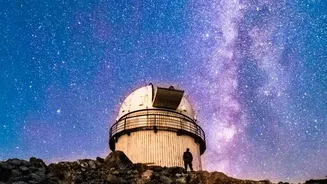
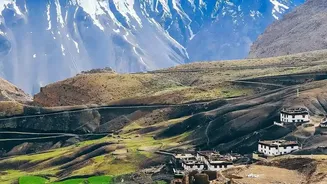
High-altitude cold deserts like Spiti Valley have a unique combination of factors that make them a paradise for stargazers. Sitting at altitudes often exceeding 12,000 feet, these regions have thin, dry air with minimal atmospheric distortion. Coupled
with sparse populations and a near-total absence of city lights, the area experiences almost zero light pollution. This results in exceptionally clear nights, with some sources estimating over 250 clear nights per year, where the Milky Way is not just visible but can appear bright enough to cast a faint shadow. These conditions have long attracted astronomers and photographers, but are now forming the bedrock of a new community-led tourism model.
From Dark Skies to Bright Futures
Astrotourism is a growing form of travel where people visit remote, dark locations specifically for astronomical experiences like stargazing, viewing meteor showers, or astrophotography. Unlike conventional tourism, it’s a low-impact activity that thrives in areas that are otherwise off the beaten path. For villages in Lahaul and Spiti, this is a game-changer. The natural resource here isn't a beach or a monument, but the darkness itself. By turning this celestial asset into an economic one, communities can generate income without needing large-scale, disruptive infrastructure, preserving the very environment that makes the region special.
Community-Led and Government-Backed
The push for astrotourism in Himachal is not just a grassroots movement; it has received significant government support. In 2025, the Himachal Pradesh government launched a stargazing facility in Kaza, Spiti, as part of a landmark initiative to promote community-led astrotourism. High-end computerised telescopes were distributed to local youths and homestay owners in villages like Kaza, Langza, and Rangrik. The Himachal Pradesh Council for Science, Technology & Environment (HIMCOSTE) is coordinating the project, providing training to locals so they can operate the equipment and guide tourists through the night sky. This model ensures that the economic benefits flow directly into the local community, empowering residents and creating new livelihood opportunities.
More Than Just Telescopes
The sustainable aspect of this initiative goes beyond just economics. The model is built around existing infrastructure, primarily local homestays. This encourages a deeper cultural exchange, where travellers experience local life, food, and heritage alongside the astronomical wonders. Initiatives like 'Astrostays' and training programs by organisations like AstronEra and Pale Blue Dot focus on a holistic experience, training local guides not just in astronomy but also in hospitality and storytelling. This approach ensures that tourism remains small-scale and authentic, preventing the pitfalls of over-commercialisation while preserving the local culture and environment.
A Blueprint for Sustainable Futures
While India’s first official Dark Sky Reserve was established in Hanle, Ladakh, the efforts in Himachal's Spiti Valley are positioning it as another premier dark-sky destination. The region is already under evaluation for formal Dark Sky certification. The success of these community-run projects in villages like Sissu, Kaza, and Langza serves as a powerful blueprint. It demonstrates how remote areas can leverage their unique natural assets to create economic resilience. By making the local community the primary stakeholder, astrotourism in Himachal is not just about showing stars to tourists; it's about building a sustainable, self-reliant, and brighter future for the people who call the mountains home.