



Harness the Power of Mirrors
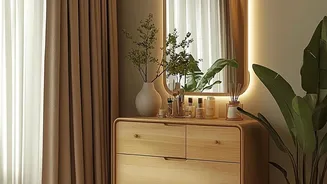
Mirrors are a designer's secret weapon for a reason: they are masters of illusion. Placing a large mirror on a wall can instantly make a room feel larger and more open. For maximum brightening effect, hang a mirror directly opposite a window. This placement
will capture and reflect natural light, bouncing it around the room and illuminating dark corners. If you don't have a window-facing wall, positioning a mirror near an artificial light source like a lamp will achieve a similar glow. Consider a full-length standing mirror, which adds height and requires no wall mounting, or mirrored furniture like a nightstand to reflect light without taking up wall space.
Layer Your Lighting
One single, harsh overhead light often creates glare in the center of the room and gloomy shadows along the edges. A layered lighting plan is far more effective for creating a cozy, well-lit space. Start with your ambient (overall) light from a ceiling fixture. Then, add task lighting where you need it, such as a stylish reading lamp by your bed or a desk lamp. Finally, incorporate accent lighting, like string lights or a slim floor lamp, to add warmth and personality. Using multiple light sources at different heights helps to distribute light more evenly, making the entire room feel brighter and more inviting.
Choose Light and Airy Textiles
Heavy, dark fabrics can absorb light and make a room feel weighed down. To brighten your bedroom, opt for light-colored textiles. Swap out heavy drapes for sheer or light-filtering curtains that allow sunlight to stream in while still providing privacy. Choose bedding in white, cream, or soft pastels to create a bright and clean look. A light-colored rug can also make a significant difference, covering up dark flooring and adding a layer of texture and coziness. Layering different textures in similar light shades, such as a knit throw and linen pillows, adds visual interest without cluttering the space.
Embrace Smart, Scaled Furniture
In a small bedroom, every piece of furniture should be functional and proportionate to the space. Avoid bulky, oversized pieces that dominate the room. Instead, look for furniture with a smaller footprint, like a floating nightstand or a narrow bookshelf that utilizes vertical space. Beds with built-in storage drawers are excellent for minimizing clutter, which is crucial as a tidy space always looks bigger. Furniture with raised legs, like a mid-century modern dresser, allows you to see more of the floor, creating a sense of openness.
Add Personality with Removable Wallpaper
If your rental agreement forbids painting, don't despair. Peel-and-stick wallpaper is a game-changer for renters. It’s easy to apply, comes in countless designs, and can be removed without damaging the walls when you move out. Creating a single accent wall behind your bed with a bright or light-patterned wallpaper can add depth and personality without overwhelming the room. For rooms with low ceilings, consider a design with vertical stripes or a climbing botanical pattern to draw the eye upward and create an illusion of height.
Keep It Cohesive and Clutter-Free
A monochromatic or cohesive color scheme can make a small space feel significantly larger. Sticking to a palette of two or three main colors, primarily in lighter shades like off-white, beige, or pale gray, helps create a calm, uncluttered look. This doesn't mean the room has to be boring. You can introduce pops of color through smaller decor items like throw pillows, art, or plants. The most important rule is to keep clutter to a minimum. Use creative storage solutions like under-bed boxes or decorative bins to keep things organized and out of sight, ensuring your cozy haven remains a restful retreat.