





The Soul of the Silk Road
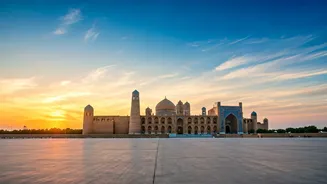
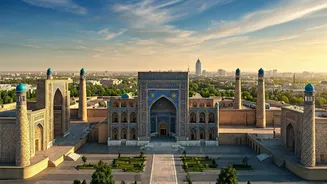
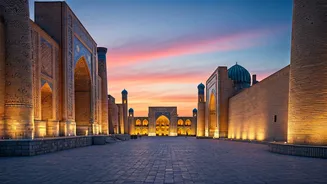
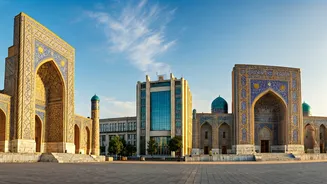
Begin your architectural tour in the heart of Old Tashkent, a world away from the city's modern avenues. Here, the Khast-Imam Complex serves as the city's religious center. While much of it was restored in 2007, it houses centuries-old monuments, including
the Barak-Khan Madrasah and the Tilla Sheikh Mosque. Nearby, the massive turquoise dome of the Chorsu Bazaar dominates the skyline. Though the current structure is a hallmark of Soviet modernism from 1980, a market has thrived on this spot for centuries, a testament to its Silk Road legacy where traders once converged. Wander through its bustling halls to find everything from spices and fresh bread to local crafts, connecting with the city's ancient commercial spirit.
A City Reborn in Soviet Modernism
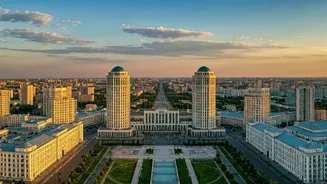
A devastating earthquake in 1966 flattened much of Tashkent, leading to a massive Soviet-led reconstruction that transformed it into a model socialist city. This era produced some of the city’s most iconic and imposing structures. The Hotel Uzbekistan, a 17-story landmark with a striking, repetitive facade, is a prime example of this period, built to host international delegates. Another key site is the State Museum of the History of Uzbekistan, originally the Lenin Museum. Its cubic form is adorned with concrete panels that echo traditional Islamic motifs, a perfect example of how Soviet Modernism was blended with local Central Asian culture. This fusion created a unique architectural style where ornamentation and historical patterns were celebrated rather than hidden.
An Underground Art Gallery
No architectural tour of Tashkent is complete without descending into its metro system, the first in Central Asia, which opened in 1977. More than just a transport network, it was designed as a series of 'palaces for the people', with each station serving as a unique art installation. The Kosmonavtlar station is a tribute to the Soviet space program, featuring futuristic blue ceramic walls and portraits of cosmonauts. In contrast, the Alisher Navoi station is a nod to Uzbekistan's literary past, with intricate panels depicting scenes from the 15th-century poet's works set under grand, mosque-like domes. Mustakillik Maydoni (Independence Square) station dazzles with opulent marble from the Kizil Kum desert and grand chandeliers. For a tiny fee, you can spend hours exploring these subterranean masterpieces.
Planning Your Architectural Weekend
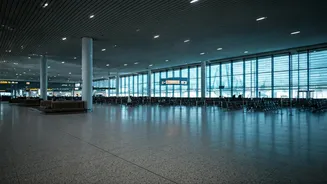
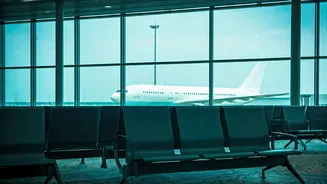
Tashkent is remarkably accessible for Indian travellers. Direct flights from Delhi take just over three hours, and the e-visa process is quick and straightforward. The best times to visit are during the spring (April-May) and autumn (September-October) when the weather is pleasant for walking. The city is very walkable, and for longer distances, the metro is both efficient and an attraction in itself. Ride-hailing apps like Yandex Go are also widely available and affordable. Be sure to visit a Plov Centre to watch chefs prepare Uzbekistan's national dish in giant cauldrons called kazans. While some high-end establishments accept cards, it is wise to carry cash (USD is easily exchanged) for markets and smaller vendors.