






The Overcast Reality
For decades, the metric for solar panel success has been efficiency under direct, powerful sunlight. It makes sense; that’s when panels produce the most power. But a significant portion of the day and year involves less-than-ideal conditions. On a heavily
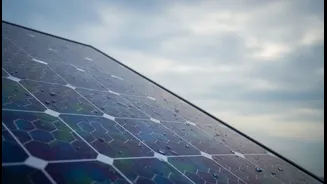
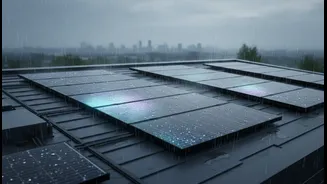
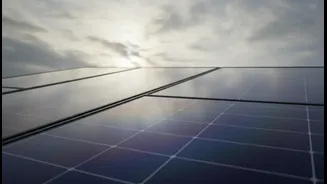
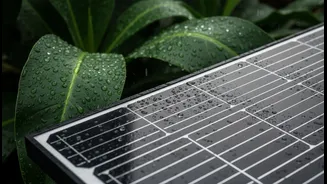
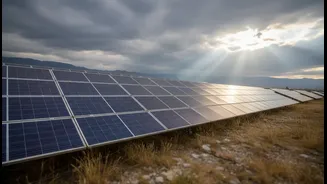
overcast day, a standard rooftop solar system might only produce 10% to 25% of its rated capacity. While this is far from zero, this dramatic drop-off is a major hurdle for consistent, reliable energy generation. In regions across India, where monsoon clouds can dominate the sky for months, this limitation directly impacts the year-round financial viability and energy independence that homeowners seek. The challenge isn't just about surviving cloudy days, but about making them productive.
Why Diffuse Light is a Big Deal
Sunlight that reaches your panels on a cloudy day is called diffuse light. It’s been scattered by clouds, dust, and other particles in the atmosphere. Anyone who has been sunburned on an overcast day knows that solar radiation still gets through. Conventional solar panels, typically made of silicon, are optimised for the intense, direct light of a clear day. They can capture diffuse light, but their efficiency drops significantly. This is because the properties of the light itself change, and the panel's structure is less suited to converting these scattered, lower-energy photons into electricity. Maximising the energy harvest from this diffuse light is the key to unlocking a more consistent power supply, making solar a more dependable primary energy source rather than just a fair-weather supplement.
The Next Generation: Perovskites and Tandems
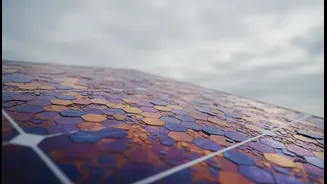
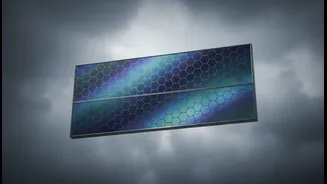
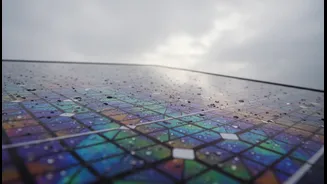
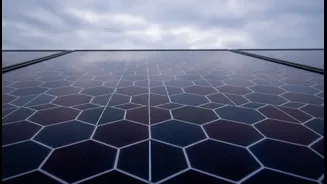
This is where new technology comes in. The most promising innovations are focused squarely on improving performance in low-light conditions. Chief among them are perovskite solar cells (PSCs). Perovskites are a class of materials with a unique crystal structure that can be 'tuned' to absorb different wavelengths of light more effectively. This makes them exceptionally good at capturing energy from indoor light or, crucially, the diffuse light of a cloudy day. Some studies have shown perovskite cells achieving remarkable efficiency under low-light conditions, far surpassing traditional silicon. Another approach is the tandem solar cell, which combines a top layer of perovskite to capture high-energy light with a bottom layer of silicon to absorb the rest. This two-pronged approach allows the panel to harvest a much broader spectrum of light, boosting overall efficiency in all conditions.
Other Emerging Solutions
Beyond perovskites, other technologies are also enhancing low-light capture. Heterojunction (HJT) and Tunnel Oxide Passivated Contact (TOPCon) cells are advanced silicon-based designs that reduce energy loss and perform better under lower irradiance, such as in the morning and evening. Bifacial panels, which can capture light reflected onto their rear side, also offer an advantage in cloudy weather where light is scattered from multiple directions. The goal for all these innovations is the same: to increase the total energy yield over the course of a full day and year, not just during a few peak hours of perfect sun. This shift in focus is crucial for making financial returns more predictable and attractive.
The Road to Your Rooftop
While technologies like perovskites are incredibly promising, they still face challenges. Researchers are working to improve their long-term durability and stability, as early versions could degrade when exposed to moisture. Furthermore, scaling up manufacturing to compete with the massive, mature silicon industry will take time and investment. However, the progress is rapid. World records for efficiency are being broken regularly, and scientists are finding new ways to make the materials more robust. As these next-generation cells become more durable and cost-effective, they could be integrated into everything from windows to building facades, generating power from ambient light in ways we can barely imagine today.