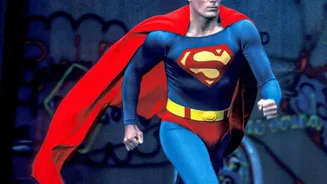






Superman (1978): Believing a Man Could Fly
Before 1978, superhero adaptations were often seen as campy. Richard Donner's 'Superman: The Movie' changed that forever. With the earnest tagline, "You'll believe a man can fly," the film treated its source material with a sense of awe and scale previously
unseen. It combined groundbreaking visual effects for its time with a heartfelt performance from Christopher Reeve, establishing the template for the modern superhero blockbuster. The movie proved that a comic book character could be the star of a serious, epic film, one that dealt with human themes like loss and finding one's purpose, all while delivering thrilling action. It was a critical and commercial success that legitimised the genre for a new generation.
Batman (1989): The Birth of the Dark Blockbuster
Tim Burton's 'Batman' was not just a film; it was a cultural event. Shaking off the lighthearted image from the 1960s TV show, this version presented a dark, gothic Gotham City and a brooding hero. But its biggest impact was arguably in its marketing. The iconic Bat-Signal logo was everywhere, creating a phenomenon known as "Batmania." This aggressive promotional campaign, which treated the film as a major brand, changed how Hollywood marketed its blockbusters. The film's success demonstrated that a darker, more psychologically complex take on a superhero could resonate with mass audiences, influencing countless adaptations that followed.
X-Men (2000): Making Superheroes Real
By the late 90s, the superhero genre had faltered. 'X-Men' revitalised it by taking its characters and their world seriously. Director Bryan Singer treated the story not just as a fantasy, but as a grounded drama with social commentary, opening with a harrowing scene in a 1944 concentration camp to establish Magneto's backstory. The film moved past spandex and cheesy dialogue, focusing instead on themes of prejudice and belonging. Its success proved that an ensemble cast of heroes could work and that audiences were ready for more complex comic book stories. 'X-Men' laid the groundwork for the modern era of superhero cinema, paving the way for both the Spider-Man trilogy and, eventually, the Marvel Cinematic Universe.
The Dark Knight (2008): The Prestige Superhero Film
If earlier films proved superheroes could be blockbusters, 'The Dark Knight' proved they could be art. Director Christopher Nolan crafted a sprawling crime epic that just happened to feature Batman. The film was lauded for its mature themes, gritty realism, and complex narrative. At its center was Heath Ledger's iconic, terrifying performance as the Joker, which earned him a posthumous Academy Award for Best Supporting Actor—a first for a major acting award in a comic book film. 'The Dark Knight' became the first superhero movie to gross over $1 billion worldwide and its failure to secure a Best Picture Oscar nomination is widely credited with the Academy's decision to expand the category. It forever changed the perception of what a superhero film could achieve critically and commercially.
The Avengers (2012): The Universe Assembles
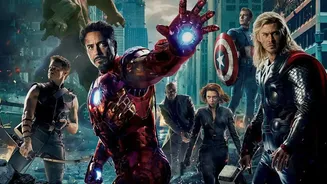
While other films built franchises, 'The Avengers' built a universe. It was the culmination of Marvel Studios' ambitious plan to connect multiple individual superhero films into a single, cohesive story. The gamble paid off spectacularly, shattering box office records and becoming a global phenomenon. The film's formula, balancing thrilling action with witty character banter and high stakes, became the blueprint for the Marvel Cinematic Universe's subsequent dominance. More than that, it popularized the concept of the shared cinematic universe, a model that virtually every major Hollywood studio has since tried to replicate. It was a game-changer that redefined not just the genre, but the business of making blockbuster movies.