






The Resume's Authenticity Problem
For decades, the resume was the undisputed key to opening career doors. But the rise of generative AI has created a new challenge: a sea of sameness. With AI tools making it easy to generate flawless, keyword-optimised resumes, it has become significantly
harder for hiring managers to distinguish between candidates. According to 2025 data, a staggering 76% of hiring managers find it more difficult to assess a candidate's authenticity because so many applications now appear 'perfect' on paper. This has led to an arms race where applicants use AI to beat company Applicant Tracking Systems (ATS), and recruiters struggle to find the genuine talent behind the polished text.
What is a Multi-Media AI Portfolio?
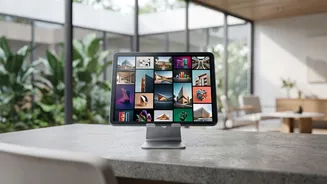
Think of it less as a document and more as a personal, dynamic website showcasing your actual abilities. An AI-augmented portfolio is a digital collection of your projects, skills, and achievements that moves beyond bullet points. It provides verifiable proof of your work, including project case studies, video introductions, code repositories, design galleries, or data analysis examples. The 'AI' component comes from tools that help you build this showcase. These platforms can structure your professional story, suggest content based on a target job description, and transform scattered notes into polished case studies, all without requiring you to have web design skills.
Showing, Not Just Telling
The core advantage of a multi-media portfolio is its ability to demonstrate competence, not just claim it. While a resume states you have 'excellent communication skills', a short video introduction actually shows it, allowing you to convey personality and enthusiasm in a way a document never can. For a developer, it's the difference between listing 'Python' as a skill and showing a link to a functioning project on GitHub. For a marketer, it's presenting a case study with real campaign metrics instead of a vague bullet point about 'driving growth'. This evidence-based approach shifts the conversation from claims to proof, giving recruiters a much richer understanding of your capabilities before an interview even happens.
Winning Over Recruiters and Hiring Managers
In a world of infinite applications, time is a recruiter's most valuable asset. A well-organized digital portfolio can make their job easier. Research shows that while a traditional resume might get a few seconds of attention, a portfolio allows for a deeper dive into a candidate's work. One report cited that 61% of recruiters agree that providing a link to a portfolio or personal website is a guaranteed way to make an application stand out. For hiring managers, seeing the work firsthand provides a window into a candidate's thought process, problem-solving skills, and ability to deliver results—qualities that are nearly impossible to verify from a resume alone. It helps them move promising candidates to the shortlist faster and with greater confidence.
The Resume Isn't Dead, Its Job Has Changed
This doesn't mean you should delete your resume file just yet. The resume still plays a crucial role, especially in passing through the initial automated screening of Applicant Tracking Systems (ATS), which are used by nearly all Fortune 500 companies. The winning strategy in 2026 is to use both tools in tandem. Your resume acts as the clean, keyword-optimised key to get past the initial filter. Your portfolio is the 'closer'—the compelling, in-depth proof that convinces the human on the other side that you are the right person for the job. The best practice is to include a clear link to your portfolio in your resume's header and on your LinkedIn profile.