





What Is an Equinox?
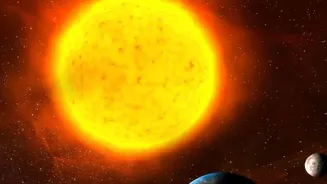
The September equinox is the moment when the Sun crosses the celestial equator—an imaginary line in the sky directly above Earth's equator—moving from north to south. This event occurs every year around September 22 or 23. In 2026, it will happen on September 23 at 00:06
UTC. The word 'equinox' comes from the Latin for "equal night," referencing the idea that day and night are of roughly equal length across the globe on this day. However, due to the way sunlight bends in our atmosphere and how sunrise is measured, most places actually experience slightly more than 12 hours of daylight. For the Northern Hemisphere, this event marks the astronomical start of autumn; for the Southern Hemisphere, it's the beginning of spring.
The Reason for the Seasons: Earth's Tilt
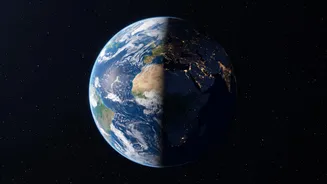
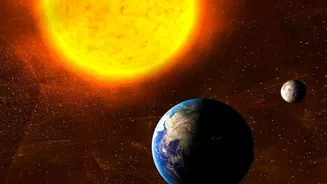
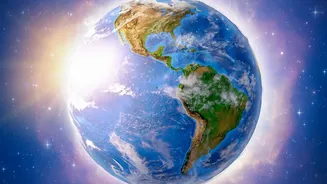
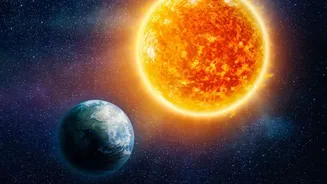
The common misconception is that seasons are caused by Earth's changing distance from the Sun. In reality, the true cause is our planet's axial tilt. Earth spins on an axis that is tilted at an angle of about 23.5 degrees relative to its path around the Sun. Because of this tilt, different parts of the planet receive more direct sunlight at different times of the year. When the Northern Hemisphere is tilted toward the Sun, it experiences summer, while the Southern Hemisphere has winter. The equinoxes represent the two points in Earth's yearly orbit where this tilt is neither toward nor away from the Sun. At these moments, the Sun's rays shine most directly on the equator, and the line separating day and night—the terminator—passes through both the North and South Poles.
A Celestial Balancing Act
Think of the Earth's orbit as a year-long journey. The solstices, in June and December, are the extremes of this journey, where one hemisphere is tilted as far toward the Sun as possible, resulting in the longest or shortest day of the year. The equinoxes, in March and September, are the halfway points between these extremes. They are moments of celestial balance when both hemispheres receive sunlight almost equally. This is also why on the day of an equinox, the Sun rises due east and sets due west for everyone on Earth. This predictable cycle is why the date of the equinox varies only slightly each year, mainly due to our calendar system's need for leap years to stay in sync with Earth's roughly 365.24-day orbit.
Astronomical vs. Meteorological Seasons
While the equinox marks the official start of astronomical autumn, you might hear meteorologists say that the season started on September 1. This is because there are two ways to define seasons. Astronomical seasons are based on the Earth's position relative to the Sun, beginning with the equinoxes and solstices. Meteorological seasons, on the other hand, are based on the annual temperature cycle and are divided into clean, three-month blocks. For consistency in climate data tracking, meteorological autumn in the Northern Hemisphere always includes September, October, and November. So, while the skies officially shift on the equinox, the calendar for weather watchers has already turned the page.
Cultural Significance in India
For centuries, the equinox has been a time of cultural and spiritual importance worldwide, often linked to harvests and balance. In India, the autumnal equinox is a significant period. It aligns with important festivals like Navaratri, a nine-night celebration dedicated to the goddess Durga. This festival celebrates the triumph of good over evil and often coincides with the harvest season, making it a time for thanksgiving and community gathering. Ayurvedic traditions also recognize the equinox as a key transition point, shifting from the fiery 'pitta' energy of summer to the airy 'vata' energy of autumn, prescribing grounding rituals to harmonize the body with the changing season.