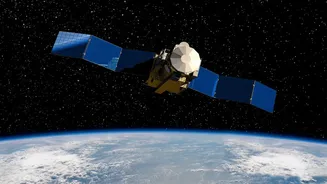







A New Guardian in the Sky
After lifting off from the Satish Dhawan Space Centre in Sriharikota on September 4, 2026, aboard a GSLV-F17 rocket, the EOS-05 satellite has been successfully making its way to its final destination. The launch vehicle placed the 2,367 kg satellite into
an initial sub-geosynchronous transfer orbit as planned. Since then, scientists at the Indian Space Research Organisation (ISRO) have been conducting a series of complex orbit-raising manoeuvres, using the satellite's onboard engines to nudge it higher and higher. These delicate operations will continue until it reaches its designated slot in a geosynchronous orbit, roughly 36,000 kilometres above the Earth.
Redemption and Resilience
The success of this mission is particularly sweet for ISRO. EOS-05 is essentially a successor to GISAT-1 (also known as EOS-03), a similar satellite that was lost during a launch failure in August 2021 when its rocket's upper stage malfunctioned. That setback was a difficult moment for India's space program. The triumphant launch of EOS-05, therefore, is not just a technological achievement but also a story of resilience, marking a strong comeback for the GSLV rocket program, which some had nicknamed the "naughty boy" in its early, less reliable days. This mission demonstrates ISRO's robust capabilities and its determination to overcome challenges.
What Makes EOS-05 Special?
Unlike most other Earth observation satellites that circle the globe in Low Earth Orbit (LEO), EOS-05 is India’s first dedicated imaging satellite designed for a geosynchronous orbit. Satellites in LEO are closer to Earth and can capture very high-resolution images, but they can only see a particular spot for a few minutes during each pass. EOS-05, by contrast, will orbit at an altitude where it matches the Earth's rotation. This allows it to “hover” over the Indian subcontinent, providing a constant, near-real-time watch over a vast area. This persistent stare is the key to its unique and powerful capabilities.
A Watchful Eye for National Security
One of the most critical applications for EOS-05 will be in the domain of national security. The satellite's ability to provide frequent imagery of border areas and the surrounding seas is a significant strategic asset. It plugs a long-standing gap by providing persistent surveillance, which is different from the fleeting glimpses offered by LEO satellites. This near-continuous monitoring allows defence and security agencies to keep a close watch on troop movements, monitor strategic assets, and enhance maritime domain awareness. This constant vigilance is a game-changer for India's intelligence, surveillance, and reconnaissance grid.
Revolutionising Disaster Management
Beyond its strategic importance, EOS-05 will be a powerful tool for protecting civilian lives. The satellite is equipped with advanced multispectral and hyperspectral imagers that can see more than the human eye. It can provide rapid monitoring of natural disasters as they unfold, such as cyclones, floods, and forest fires. By capturing images of a specific area at very frequent intervals—potentially every five minutes for a selected spot—it can help authorities track the progress of a disaster, assess its impact, and mount quicker, more effective rescue and relief operations.
A Boost for Agriculture and the Environment
The benefits of EOS-05 extend to India's farmlands and natural ecosystems. Its hyperspectral sensors can provide detailed information on crop health, soil moisture, and vegetation status across the country. This data is invaluable for agricultural planning, forecasting yields, and managing water resources more efficiently. Furthermore, the satellite will play a key role in environmental monitoring, tracking changes in forest cover, water bodies, and coastal zones. This continuous stream of data will support sustainable development and help in managing the country's precious natural resources.