






Plan Before You Purchase
A successful low-waste Sadhya begins not at the market, but at your planning table. The single biggest cause of food waste is over-buying. Before you write a shopping list, get a firm headcount of your guests. While last-minute additions are common in Indian
households, a rough estimate helps you calculate portions more accurately. Plan your menu based on this number, deciding on which of the 26-plus traditional dishes you will prepare. It’s better to master a few essential dishes like Avial, Sambar, Thoran, and a Payasam than to attempt an overwhelming spread that leads to excess. Make smaller portions of each dish; the variety is what makes the feast grand, not the quantity of each individual item. Create a detailed ingredient list, and then check your pantry before you leave the house. This prevents buying duplicates of spices or staples you already own.
The Art of Conscious Shopping
With your list in hand, shopping becomes a targeted mission. Prioritise local and seasonal vegetables, which are central to the authentic flavour of a Sadhya. Buying local supports farmers and reduces the carbon footprint associated with long-distance transportation. Take your own cloth bags for vegetables and reusable containers for items like lentils, rice, and spices to avoid single-use plastic packaging. Many stores now allow you to buy staples in bulk, which is often more economical and eco-friendly. When selecting produce, don’t shy away from 'ugly' or imperfect-looking vegetables. They are just as nutritious and flavourful but are often passed over, contributing to farm-level food waste. For ingredients like coconut, consider buying a whole one instead of pre-grated packets; you can use the water, flesh, and even the shell for various purposes.
A Mindful and Efficient Kitchen
The prep stage is where you can make significant waste-reducing interventions. Adopt a 'root-to-stem' cooking philosophy. Many vegetable peels and stems that are typically discarded can be used to make a flavourful stock for your Sambar or Rasam. For example, the tough stems of cauliflower or broccoli can be sliced thin and roasted into a crispy snack. Instead of throwing away peels, consider starting a compost bin. This turns kitchen scraps into nutrient-rich fertiliser for your garden. To save time and energy, you can chop all the vegetables the day before and store them in the refrigerator. Similarly, grinding a bulk batch of the coconut, cumin, and green chilli paste used in many dishes like Avial and Thoran can streamline your cooking process.
Serving with Sustainable Tradition
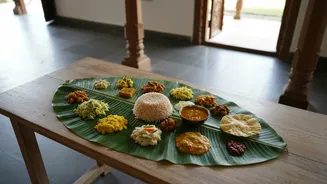
The traditional way of serving a Sadhya is inherently eco-friendly. The banana leaf is the original zero-waste plate—natural, biodegradable, and it even adds a subtle aroma to the hot food served on it. Embrace this tradition fully. If sourcing large banana leaves is difficult, smaller cut leaves or even frozen ones are good alternatives. What's important is to steer clear of disposable plastic plates or cutlery. If you need supplementary bowls, opt for reusable steel, ceramic, or traditional brass ones. When serving, remember the sadhya etiquette of placing small portions of each curry on the leaf. This allows guests to sample everything without being overwhelmed and reduces the likelihood of food being left on the plate.
The After-Feast Strategy
Even with careful planning, leftovers are almost inevitable. Have a strategy ready. Keep reusable containers handy to pack food for guests to take home. Leftover Sadhya dishes can also be creatively repurposed the next day. A mix of leftover curries can be enjoyed with dosas or idlis, and leftover rice can be used to make curd rice or lemon rice. If you have a significant amount of untouched food, consider sharing it with neighbours or local community shelters. For the food waste that cannot be saved, use your compost system. The banana leaves themselves are fully compostable and will break down naturally, returning to the earth and completing the sustainable cycle of your feast.