






Beyond the Usual Suspects
For decades, the story of harmful algal blooms seemed straightforward. Excess nutrients, primarily nitrogen and phosphorus from agricultural runoff and untreated wastewater, were identified as the main culprits. These nutrients act like a super-fertiliser
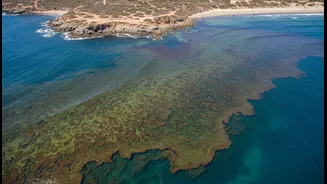
in water bodies, causing microscopic algae to multiply at an explosive rate. This rapid growth, known as a bloom, can block sunlight from reaching other marine life and, upon death and decomposition, create vast low-oxygen “dead zones”. Certain types of algae also produce powerful toxins that can be deadly to fish, birds, marine mammals, and even humans who consume contaminated seafood or come into contact with the water. The management strategy was, therefore, logical: control nutrient pollution at its source. While this remains crucial, scientists now realise it is only part of a much more complex picture.
A More Complex Climate-Driven Picture
Recent research highlights that climate change is a powerful and multifaceted accelerator of HABs. Warmer water temperatures, a direct consequence of climate change, not only spur the growth of many toxic algae species but also extend their growing season. Some cyanobacteria, or blue-green algae, are particularly adept at thriving in warmer conditions, outcompeting other, more benign algae. Changing rainfall patterns, another hallmark of a shifting climate, also play a significant role. Intense rainfall can wash larger amounts of nutrients from land into waterways, while subsequent periods of drought can lead to stagnant, slow-moving water, creating ideal incubator conditions for blooms. Furthermore, research in areas like the Arabian Sea has revealed that gradual ocean warming can create layers in the water column that reduce circulation, trapping nutrients at the surface where algae can thrive. This shows that the problem is not just about what flows into the sea, but how the ocean itself is behaving differently.
New Priorities: Prediction and Prevention
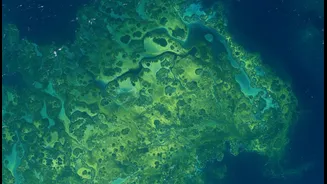
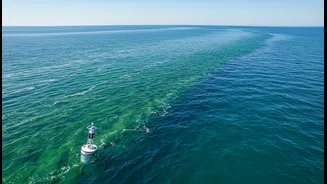
Given this more complex understanding, the priorities for ocean protection are shifting from a purely reactive stance to one that is proactive and predictive. The goal is no longer just to clean up blooms after they occur, but to forecast and prevent them. This involves a suite of new technologies and strategies. Advanced satellite imagery and AI-powered models are being developed to create early-warning systems, giving authorities and industries like fishing and tourism time to prepare. Instead of broad-stroke nutrient reduction, efforts are becoming more targeted, focusing on bloom “hotspots” and the specific combination of factors that trigger events in those locations. Public-private partnerships are being encouraged to spur innovation in monitoring and mitigation technologies, from toxin sensors on autonomous buoys to new methods for treating water before a bloom gets out of control. The new focus is on an integrated approach that combines watershed management, advanced monitoring, and public outreach.
The View From India's Coastline
These global shifts are profoundly relevant for India, with its 7,500-kilometre coastline and a significant portion of its population dependent on the sea for their livelihoods. India has documented a rising number of HAB events along both its east and west coasts, impacting vital fishing grounds and local economies. Events have been recorded in numerous lakes and coastal areas, including Vembanad Lake, the coasts of Goa, and the Gulf of Mannar. The primary drivers mirror global trends: a combination of nutrient loading from untreated sewage and agricultural runoff coupled with the effects of a changing climate. In response, Indian institutions are embracing new strategies. The Algal Bloom Information Service (ABIS) provides alerts for coastal hotspots. Researchers have also developed tools like “CyanoKhoj,” a cloud-based dashboard using satellite data to monitor inland water bodies. The emphasis is increasingly on combining technological solutions with community-level management and citizen science to create a robust, localised defence against the growing threat of HABs.