
A Panoramic View of the Cosmos
The single most impressive feature of the Roman Space Telescope is its enormous field of view. While its primary mirror is the same size as the Hubble Space Telescope's, its Wide Field Instrument can capture a patch of the sky at least 100 times larger
than Hubble can in a single snapshot, all with the same crystal-clear resolution. Imagine trying to take a picture of a massive mural with your phone. Hubble would need to take hundreds of close-up shots and stitch them together, a process that could take weeks or months. Roman can capture the entire mural in just a couple of shots. This survey power will allow astronomers to map vast regions of space far more efficiently, creating an unprecedented atlas of the universe. This capability is not just about convenience; it makes entirely new types of science possible by gathering massive datasets on cosmic scales.
Investigating the Dark Universe
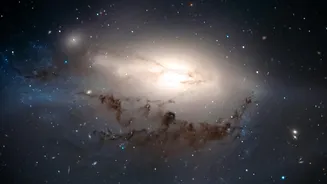
Two of the biggest mysteries in modern physics are dark matter and dark energy. We know they exist because of their gravitational effects on the things we can see, but we don't know what they are. Together, they are believed to make up roughly 95% of the universe. Roman’s primary mission is to shed light on this dark universe. By surveying billions of galaxies across cosmic time, the telescope will map how the universe has expanded and how its large-scale structures have grown. It will use several methods, including tracking distant stellar explosions called supernovae and measuring how the light from galaxies is subtly bent by the gravity of unseen dark matter, a technique called weak gravitational lensing. These massive surveys will give scientists the data they need to test their theories about what dark energy is and how it is shaping the fate of our cosmos.
A Powerful New Planet-Hunting Tool
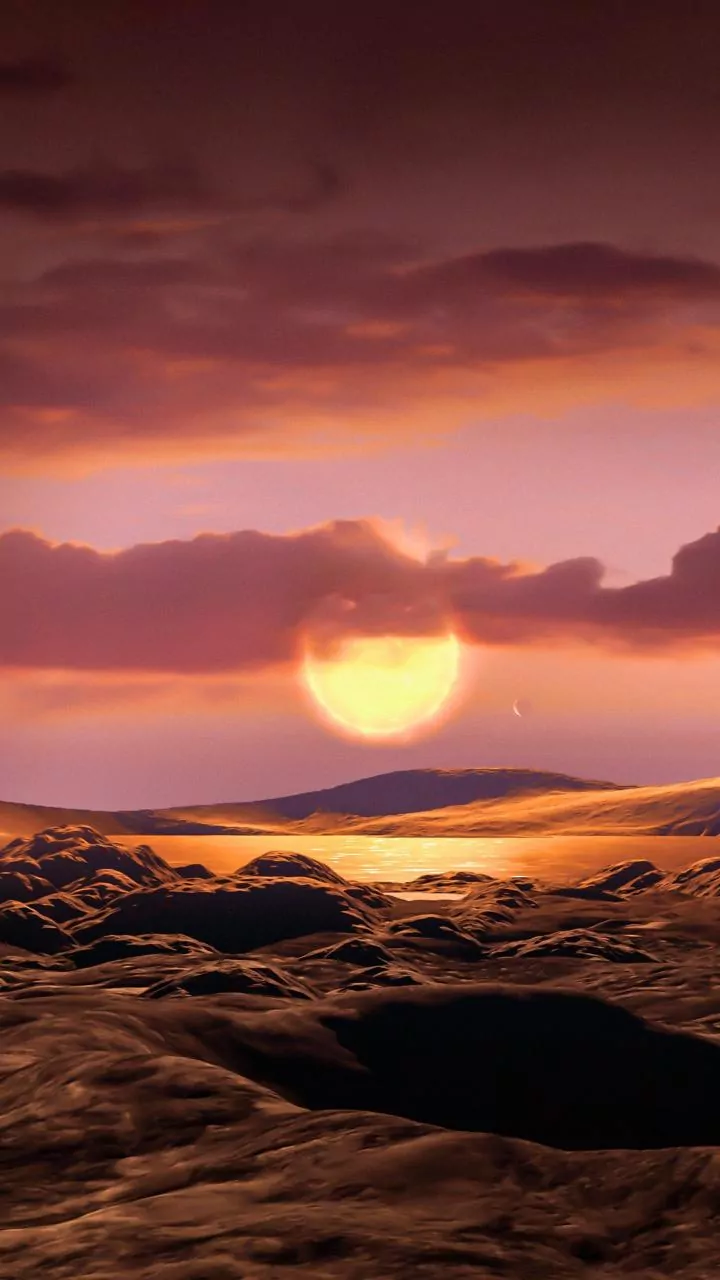
While NASA's Kepler and TESS missions found thousands of planets by watching for the slight dimming of a star's light as a planet passes in front (the transit method), Roman will add a powerful new technique to the space-based arsenal: gravitational microlensing. This method relies on a prediction from Einstein's theory of general relativity. When a star with a planet passes in front of a more distant star, its gravity acts like a lens, briefly magnifying the background starlight. The planet adds its own tiny, additional blip to this brightening event. Microlensing is particularly good at finding planets that are further from their star, in orbits similar to Jupiter or Saturn, as well as finding 'rogue' planets that wander through the galaxy without a host star. Roman is expected to find thousands of new worlds, providing a more complete census of the planets in our galaxy.
Directly Imaging Worlds with a Coronagraph
Finding a planet next to its star is like trying to spot a firefly next to a brilliant searchlight. To get around this, Roman is equipped with a groundbreaking piece of technology called a Coronagraph Instrument. This instrument is a technology demonstrator designed to block the overwhelming glare from a star, allowing the faint light reflected by an orbiting planet to be seen directly. Roman's coronagraph is projected to be 100 to 1,000 times more powerful than previous instruments of its kind, using a complex system of masks and self-flexing mirrors to create an artificial eclipse inside the telescope. While its main goal is to test the technology for future missions, it should be capable of directly imaging large, Jupiter-like planets. This represents a crucial step toward the ultimate goal of taking pictures of Earth-like planets around other stars.
A Partner, Not a Replacement
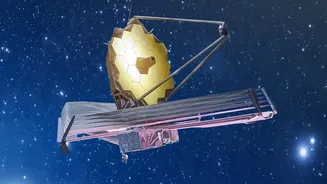
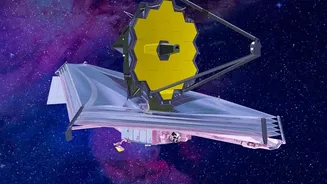
The Roman Space Telescope is not intended to replace Hubble or the James Webb Space Telescope (JWST). Instead, it's designed to work with them as a powerful cosmic team. Roman is the wide-angle scout; it will rapidly survey huge areas of the sky to find interesting objects, rare phenomena, and promising targets. Once Roman identifies something of interest—be it a strange galaxy or a unique planetary system—Hubble and Webb can perform deep, focused follow-up observations to study it in greater detail. The telescope is aptly named after Nancy Grace Roman, NASA's first chief of astronomy, who was instrumental in the creation of the Hubble Space Telescope and is often called the 'Mother of Hubble'. Her namesake observatory now continues her legacy, expanding our view of the cosmos in a way that perfectly complements the observatories that came before it.