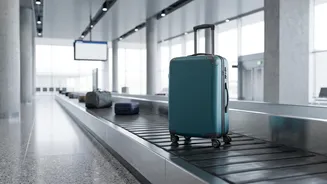






The 'One-Bag Rule' Is Now Strictly Enforced
The most significant change for travellers is the strict enforcement of the 'one-bag' policy for cabin luggage. While the rule itself has existed for years, the Bureau of Civil Aviation Security (BCAS) and the Central Industrial Security Force (CISF)
are now ensuring its implementation on all flights departing from Indian airports, both domestic and international. Previously, many travellers could pass through security with a rolling suitcase plus a separate laptop bag and a handbag. That practice is largely over. Now, airlines and security personnel are asking passengers to consolidate their belongings into a single piece of cabin luggage. This renewed focus aims to reduce clutter at security checkpoints, speed up the screening process, and ensure faster boarding times.
What Counts as One Bag?
The rule essentially limits you to one primary piece of hand luggage. This can be a standard trolley bag, a backpack, or a duffel bag, as long as it meets your airline's specific size and weight restrictions. For most domestic carriers in economy class, this means a bag weighing no more than 7 kg. Air India is slightly more generous, allowing 8 kg in economy. The key point of confusion is what to do with items like purses and laptop bags. Under the strict enforcement, these items are expected to be placed inside your main cabin bag before you reach the security checkpoint.
Are There Any Exceptions?
Yes, but they are specific. While the 'one-bag' messaging sounds absolute, official guidelines do allow for a few additional items. Most airlines permit passengers to carry one small personal item, such as a lady's handbag, a camera, a laptop in a slim sleeve, or an overcoat. Additionally, items like a blanket, a reasonable amount of reading material, a walking stick, or a collapsible wheelchair are also permitted. For those travelling with infants, necessary items like baby food for the flight can be carried separately. The critical factor is that these personal items must be small enough to fit under the seat in front of you. A bulky backpack carried alongside a trolley bag will likely be flagged.
Navigating the Rules for a Smoother Journey
To avoid a last-minute repack at the airport, planning is key. First, consolidate as much as possible. Opt for a cabin bag that has dedicated compartments for laptops and documents. This helps you keep everything in one place. Second, wear your bulkiest items, like a jacket or sweater, instead of packing them. Third, remember the unchanged rules for liquids, aerosols, and gels (LAGs): all must be in containers of 100ml or less and placed in a transparent, resealable bag. Also, power banks are strictly for cabin baggage only and cannot be placed in your checked luggage. Finally, while the BCAS sets the overarching rule, final enforcement often comes down to the airline. Always check the specific baggage policy on your ticket or the airline's website before you head to the airport, as allowances can vary, especially for different fare classes like business or premium economy.