





Finding the time and energy to exercise feels like a constant battle. But what if you could build a lasting fitness habit in just 10 minutes a day? It’s not a gimmick; it’s a science-backed strategy for making consistency your new superpower.
Why 10 Minutes Is a Game-Changer
The biggest
barrier to fitness is often the 'all or nothing' mindset. We think we need a full hour at the gym to make it count, and when we can't find that hour, we do nothing. Research shows this is a flawed approach. Studies have found that even short bursts of vigorous activity, as little as 5-10 minutes, can lead to significant health benefits, including improved cardiovascular health, better blood sugar control, and reduced mortality risk. These 'exercise snacks' are effective because intensity can be more important than duration. A short, focused session gets your heart rate up and triggers the same positive physiological changes as longer, more moderate workouts. Most importantly, a 10-minute commitment removes the primary excuse for not exercising: lack of time. It’s a small, achievable goal that makes it easier to start and stay on track.
The Psychology of a Lasting Habit
Consistency trumps intensity every time when it comes to long-term results. The key to building a fitness habit isn't about gruelling workouts, but about making the behavior automatic. Psychologists refer to this as the 'habit loop': a cue, a routine, and a reward. Starting with a 10-minute workout makes the routine incredibly easy to adopt. The brain is more likely to accept a small change than a drastic overhaul. To build your own loop, you need to make the habit obvious, attractive, and easy. An example would be: when my morning coffee is brewing (the cue), I will do my 10-minute workout in the living room (the routine), and afterward, I will feel energized and accomplished (the reward). By repeatedly following this loop, the decision-making part of your brain is bypassed, and the action becomes second nature.
Designing Your Perfect 10-Minute Workout
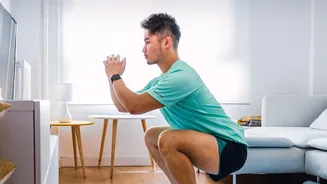
You don't need any equipment to get an effective full-body workout at home. The goal is to keep moving for the full 10 minutes with minimal rest. A simple circuit format works wonders. Try performing each of the following exercises for 45 seconds, with 15 seconds of rest in between. Complete two full rounds. 1. Jumping Jacks: A classic cardio move to get your heart rate up. 2. Bodyweight Squats: Focus on good form, keeping your chest up and sitting back into your hips. 3. Push-ups: A fantastic upper-body and core strengthener. If a full push-up is too hard, perform them on your knees. 4. Lunges: Alternate legs with each repetition to work on balance and leg strength. 5. Plank: Hold a steady plank to engage your entire core. Don't let your hips sag. This simple routine covers cardio, lower body strength, upper body strength, and core stability, all within ten minutes.
Making It Stick for the Long Haul
The initial motivation will eventually fade, and that's when habit takes over. But you can set yourself up for success. First, schedule your workout like any other important appointment. Putting it in your calendar makes it a non-negotiable part of your day. Second, prepare your environment. Lay out your workout clothes the night before or designate a specific corner of your room for exercise. This reduces 'friction' and makes it easier to start. Third, have a backup plan for when life gets in the way. If you miss a morning session, know you can do it during your lunch break. The goal isn't perfection; it's to avoid letting one missed workout derail your entire routine. Finally, focus on how exercise makes you feel—more energetic, less stressed, a sense of accomplishment—rather than just long-term outcomes like weight loss. This immediate positive feedback reinforces the habit loop.