




Understanding Weight-Bearing Stress
When you perform exercises on land, like walking, jogging, or jumping, your joints—particularly your knees, hips, and ankles—have to support your body weight. This is known as weight-bearing stress. For individuals at a higher weight, this stress is amplified,
increasing the risk of pain, discomfort, and potential injury. This can make starting and sticking to a fitness routine incredibly challenging. The pressure on these joints can discourage many from continuing, creating a difficult cycle where the desire to get healthier is met with physical pain.
How Water's Buoyancy Lifts the Load
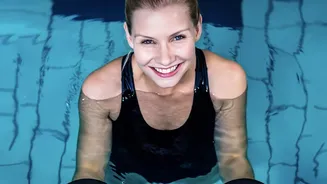
This is where swimming changes the game. Water has a unique property called buoyancy, which counteracts gravity. When you're in the water, your body is supported, drastically reducing the amount of weight your joints have to bear. In fact, when submerged in water up to your neck, the water supports up to 90% of your body weight. This means you can move, stretch, and exercise with significantly less strain on your joints. This near-weightless environment makes swimming an ideal starting point for fitness, as it allows for longer, more comfortable workouts without the harsh impact of land-based activities.
A True Full-Body Workout
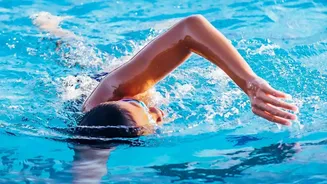
While being gentle on the joints, swimming is anything but an easy workout. Water is about 12 to 14 times more resistant than air, meaning every movement requires more effort. This resistance engages muscles throughout your entire body, from your arms and shoulders to your core and legs, providing a comprehensive, muscle-toning workout. Different strokes target different muscle groups, so you can vary your routine for balanced strength. This combination of low impact and high resistance makes swimming an incredibly efficient way to build strength and endurance.
Cardiovascular Health and Calorie Burn
Swimming is a fantastic cardiovascular exercise that gets your heart rate up, improving circulation and strengthening your heart muscle. Regular swimming can help lower blood pressure, reduce the risk of heart disease and type 2 diabetes, and improve cholesterol levels. It's also an effective way to burn calories. A person weighing around 70 kilograms can burn between 400 and 700 calories per hour, depending on the intensity and stroke. For example, a vigorous freestyle can burn a significant number of calories, making it a powerful tool for weight management.
More Than Just Physical Benefits
The benefits of swimming extend beyond the physical. The rhythmic nature of swimming can be meditative, helping to reduce stress and anxiety. Being in the water allows you to disconnect and focus on your breathing and movement, which can have a calming effect. Studies have shown that swimming can boost your mood by stimulating the release of endorphins, the body's natural 'feel-good' chemicals. For many, the mental release and improved self-confidence are just as rewarding as the physical results.
How to Get Started
Diving in is easier than you think. Start slow with 20- to 30-minute sessions, three times a week. Always begin with a 5- to 10-minute warm-up of gentle swimming or walking in the water. Don't worry about mastering perfect strokes immediately; focus on getting comfortable. You can use tools like a kickboard to work your legs or simply walk or jog in the shallow end. Water aerobics classes are another excellent, structured option that provides a guided workout in a social setting. The most important thing is to find a routine that you enjoy and can stick with consistently.