


The Allure of the Dark Sky
Astrotourism is travel for the specific purpose of stargazing, an experience increasingly rare for the world's urban population. As cities expand, so does light pollution, creating a permanent orange glow that washes out all but the brightest stars and planets.
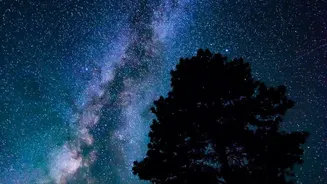
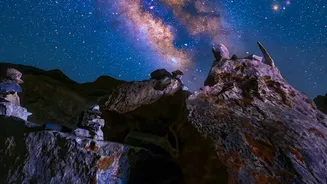
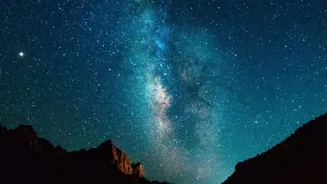
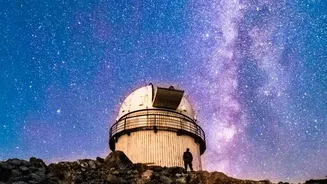
In response, travellers are seeking out the planet's last remaining dark places. India, with its vast and varied landscapes, is emerging as a prime destination for this celestial pilgrimage. High-altitude deserts and remote mountain regions offer the perfect conditions: thin, dry air and minimal light interference, which combine to create exceptionally clear and dark night skies. It's an opportunity to see the Milky Way in its full, breathtaking glory, witness meteor showers, and connect with the cosmos in a way that feels both ancient and profound.
Why Himachal is a Stargazer's Paradise
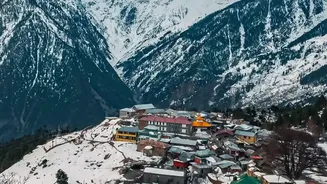
While destinations like Ladakh have long been on the astro-tourist map, Himachal Pradesh is rapidly gaining recognition as a stellar alternative. The state's Spiti Valley, a cold desert mountain region, boasts some of the best conditions for stargazing in the country, with over 250 clear nights a year. Its high elevation, often exceeding 3,500 metres, means there is less atmosphere to distort the view. This natural advantage, combined with a sparse population and a growing network of community-run homestays, makes it uniquely positioned to offer an authentic and accessible dark-sky experience. Villages like Langza, Komic, Kibber, and Hikkim in Spiti are becoming hotspots, offering near-perfect, uninterrupted views of the night sky.
A Community-Powered Cosmic Vision
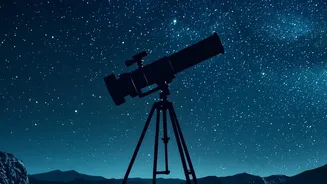
What makes the rise of astrotourism in Himachal particularly compelling is its community-centric approach. In mid-2025, the state government launched a landmark initiative to promote stargazing in the Spiti Valley, specifically in Kaza. The program, led by the Himachal Pradesh Council for Science, Technology & Environment (HIMCOSTE), aims to empower local entrepreneurs by turning the region's pristine skies into a sustainable livelihood. High-end, computerized telescopes have been distributed to local youths and homestay owners in villages like Kaza, Langza, and Rangrik, along with the necessary training to operate them and guide tourists. This initiative not only provides a new income stream for tribal communities but also ensures that the tourism is managed by the people who call the region home, blending science, culture, and economic opportunity.
What to Expect on Your Celestial Journey
A trip to Spiti for stargazing is more than just looking through a telescope; it's an immersive experience. Local homestays are central to the journey, offering not just a place to sleep but also a connection to the unique culture of the Spiti Valley. Many homestay owners are now trained to guide their guests through the night sky. On a clear, moonless night, you can see the Milky Way galaxy arching overhead, spot planets with the naked eye, and learn to identify constellations. Astrophotography workshops are also becoming popular, teaching visitors how to capture the stunning celestial displays. The experience is often combined with other local activities, such as visiting ancient monasteries like Key Monastery, trekking to high-altitude lakes like Chandratal, or even hunting for marine fossils in villages like Langza, which is famously known as the “Fossil Village”.
Planning Your Trip to the Stars
Timing is everything for a successful stargazing trip. The best months to visit Spiti Valley are from May to October when the roads are generally open and the skies are clearest. Planning your visit around the new moon is crucial, as a bright moon can significantly diminish the visibility of stars. Reaching Spiti involves a long but scenic journey, either from Manali via the Kunzum Pass or from Shimla through Kinnaur. Given the high altitude, acclimatization is essential. Spend a couple of days at a lower altitude before ascending further to avoid altitude sickness. Accommodations range from basic but warm homestays to more comfortable guesthouses in Kaza, the main town in Spiti. Booking in advance, especially during the peak tourist season, is highly recommended.