







What Happened on Flight AI 2030?
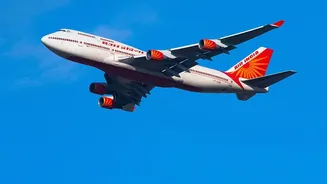
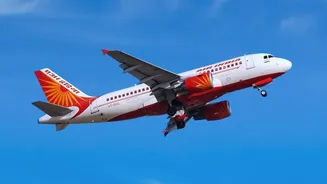
On Wednesday, October 14, Air India flight AI 2030 was on its scheduled route from Frankfurt, Germany, to New Delhi. The Boeing 787-9 aircraft was carrying 293 passengers and 13 crew members. As the flight neared its destination, it was unexpectedly ordered
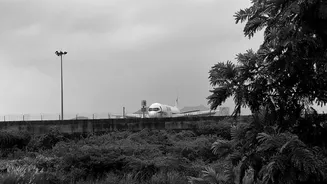
to change course. Instead of landing in Delhi, the plane was diverted to Jaipur International Airport, landing at approximately 9:35 AM. Upon arrival, the aircraft was directed to an isolation bay, a standard procedure for security alerts, where it was met by security personnel. Passengers described confusion onboard as the pilot announced the diversion due to 'security reasons' but initially could not provide further details.
A Hijack Scare, But From Where?
The root of the diversion was a 'squawk 7500' alert, the universal transponder code that signals unlawful interference, such as a hijacking. This alert was detected by Air Traffic Control (ATC) systems as the plane flew through Indian airspace, triggering a mandatory and serious security protocol. However, the pilots of AI 2030 reportedly informed ATC that all operations on the flight were normal, creating immediate confusion. Airline officials have stated that the pilots made no mistake and did not deliberately input the code. This has shifted the focus of the investigation towards a potential technical glitch, possibly within the ATC's own radar and communication systems.
The 'Unnecessary' Diversion Debate
The term 'unnecessary' stems from the conflict between the alert and the reality on the flight deck. While any '7500' squawk must be treated with utmost seriousness, the pilots' immediate confirmation that there was no threat has raised questions about the decision to divert. Aviation experts note that while safety protocols are rigid, this incident appears to be a case of a 'false alarm'. The probe, to be conducted by the Directorate General of Civil Aviation (DGCA), is now focused on whether a system malfunction created a ghost signal that forced a fully operational flight into a disruptive and costly diversion. Senior pilots have noted that accidentally entering the four-digit hijack code is extremely unlikely, lending more weight to the theory of a system error external to the aircraft.
Hours of Waiting for Passengers
For the 306 people on board, the diversion led to a long and frustrating day. After landing in Jaipur, passengers remained on the aircraft for about two hours before being asked to deplane. Once inside the terminal, they and their luggage had to undergo a complete security rescreening. Air India stated it worked to minimise inconvenience, but the process was lengthy. The flight was eventually cleared for departure and took off from Jaipur at 2:37 PM, finally landing in Delhi at 3:11 PM, hours behind schedule. While the crew was praised by some passengers for providing regular updates in a confusing situation, the incident highlights the significant passenger impact of such security alerts, real or false.
Airline Response and Your Rights
Air India issued a statement acknowledging the diversion was due to a 'perceived security concern' and confirmed that the aircraft, crew, and passengers were cleared after necessary checks. The airline apologised for the 'unforeseen disruption'. Under DGCA regulations, passenger rights during diversions are primarily focused on care and onward travel. Airlines are typically required to provide refreshments and, if necessary, accommodation for significant delays. However, compensation is generally not mandated for diversions caused by external factors like security threats or ATC instructions, which are considered beyond the airline's control. Air India does provide official 'Flight Disruption Statements' which passengers can use for insurance claims.