




The Sedentary Stance: What Sitting Does to Your Hips
The human body is designed for movement, but modern work often involves sitting for eight or more hours a day. When you're seated, your hips are held in a flexed position. This keeps the muscles at the front of your hips, known as the hip flexors, in a constantly
shortened state. Over time, these muscles adapt by becoming tight and stiff. At the same time, the muscles on the opposite side, your glutes, become inactive and weak from lack of use. This combination of tight hip flexors and weak glutes creates a significant muscle imbalance around your pelvis, which is the root cause of the discomfort many desk workers experience.
A Domino Effect of Discomfort
Tight hips are not just a localized problem; they can set off a chain reaction of issues throughout the body. When your tight hip flexors pull your pelvis forward, it can increase the strain on your lower back, leading to chronic pain. This imbalance can also affect your posture, encouraging a slouch that causes rounded shoulders and neck tension. Furthermore, the body may compensate for poor hip function by altering how you walk or move, which can place undue stress on your knees. For those who are active outside of work, tight hips can limit athletic performance and increase the risk of injury by preventing you from moving efficiently.
Reclaiming Mobility: Simple Stretches for Relief
The good news is you can counteract these effects with simple, consistent mobility work. The goal is to lengthen the tight muscles and reactivate the weak ones. You don’t need a gym or fancy equipment—just a few minutes and a bit of floor space. Integrating these movements into your day, perhaps during a short break from work, can make a world of difference. The key is to be gentle and consistent; these are not meant to be intense workouts but rather restorative movements to bring your body back into balance.
Four Essential Moves for Happier Hips
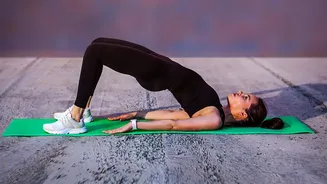
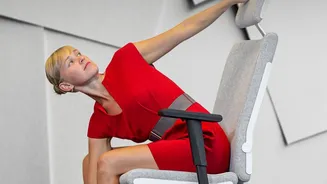
Here are four effective exercises to get you started on the path to better hip mobility:1. Kneeling Hip Flexor Lunge: Start by kneeling on one knee, as if you were about to propose. Place your other foot flat on the floor in front of you, creating a 90-degree angle at the knee. Gently push your hips forward while keeping your back straight until you feel a stretch in the front of the hip of your kneeling leg. Hold for 20-30 seconds and switch sides.2. Glute Bridge: Lie on your back with your knees bent, feet flat on the floor hip-width apart, and your arms by your sides. Squeeze your glutes and lift your hips off the floor until your body forms a straight line from your shoulders to your knees. Hold for a moment at the top before slowly lowering back down. This helps to strengthen the underused glute muscles.3. Pigeon Pose (Supine Figure-Four): For a gentler version of the classic yoga pose, lie on your back with your knees bent. Cross your right ankle over your left knee. Reach through your legs to grab the back of your left thigh and gently pull it toward your chest until you feel a stretch in your right glute and hip. Hold for 20-30 seconds, then repeat on the other side.4. Seated Spinal Twist: While sitting tall in your chair, place your feet flat on the floor. Gently twist your upper body to one side, using the chair's armrest or back for a light assist. This helps to release tension not just in the hips but also through the torso and back. Hold for 20 seconds before switching sides.