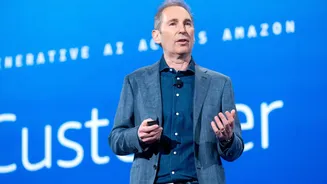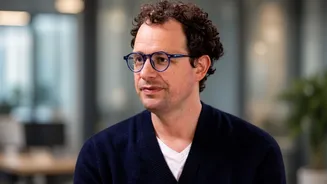







Dario Amodei, the CEO of AI firm Anthropic, has made a stunning prediction: diseases like cancer could be relics of the past in under a decade. This bold claim sits at the intersection of hope and hype, but what is it based on?
The Billion-Dollar Bet on AI
Dario Amodei, whose company
Anthropic develops the AI model Claude, suggested that artificial intelligence could spark an 'age of miracles', solving problems that have stumped scientists for generations. He believes AI can compress what would have been 50 to 100 years of medical progress into just five or ten. This isn't just talk; Anthropic has partnered with several biotechnology firms, including Bristol Myers Squibb, to accelerate drug discovery for conditions ranging from cancer to rare diseases. Amodei is not alone in his optimism. Leaders at Google DeepMind and other tech giants have echoed similar sentiments, pointing to AI's power to revolutionize research. The core idea is that AI can analyse vast biological datasets, spot patterns humans would miss, and dramatically speed up the identification of promising new treatments.
How AI Is Aiding the Fight Today
Beyond future promises, AI is already making a tangible impact on cancer care. Its most significant contributions are currently in diagnostics and personalizing treatment. AI models are being trained to analyse medical images like CT scans and mammograms with incredible precision, helping to spot tumours earlier and more accurately than the human eye alone. For example, researchers are using AI to screen for pancreatic cancer with the potential to raise detection rates from 50% to nearly 100%. Early detection is one of the most critical factors in surviving cancer. Furthermore, AI helps create personalised medicine by analysing a patient's specific genetic profile and tumour characteristics to predict which therapies will be most effective, moving away from a one-size-fits-all approach.
A Reality Check on a 'Cure'
While the potential is enormous, many experts in oncology and pharmaceuticals urge caution. They argue that a 'cure' for cancer within a decade is highly unlikely. A major reason for this scepticism is the very nature of cancer itself; it is not one single disease but a complex collection of hundreds of diseases that are adaptive and constantly evolving. Vertex Pharmaceuticals Executive Chairman Jeff Leiden has dismissed such timelines as unrealistic, noting that even if AI can identify a promising drug candidate in record time, that is only the first step. Any potential drug must still go through the same rigorous and lengthy process of lab research, animal testing, and multi-phase human clinical trials to prove it is both safe and effective. This regulatory journey typically takes 10 to 12 years on its own and cannot be compressed by AI.
The Data Dilemma
The effectiveness of any AI model hinges on the quality and quantity of the data it is trained on. In medicine, this presents a significant hurdle. High-quality medical data is often fragmented across different hospitals and research institutions, inconsistent, and subject to strict privacy regulations. For AI to truly revolutionise drug discovery, it needs access to massive, diverse, and well-annotated datasets, which are difficult and expensive to create. Furthermore, biases in the data can lead to biased outcomes. For instance, if an AI is trained primarily on data from one demographic, its conclusions may not be applicable or effective for others, potentially worsening health inequities. Scientists stress that AI is a powerful tool, but it cannot perform experiments or validate its own hypotheses in the real world.