





Why Pruning Helps Plants ‘Breathe’
The idea that pruning helps plants “breathe” is more than just a saying. By selectively trimming away overgrown or dead branches, you improve air circulation around and within the plant. Stagnant, humid air trapped in dense foliage can create a breeding
ground for fungal diseases like powdery mildew. Thinning out the plant allows air to move freely, which helps keep the leaves dry and reduces the risk of infection. This improved airflow also ensures that all parts of the plant can properly exchange gases through their leaves, a process vital for healthy growth.
More Light, More Life
Beyond airflow, pruning allows more sunlight to penetrate the plant's canopy. When a plant is too dense, the outer leaves block light from reaching the inner and lower sections, causing them to yellow and die off. By trimming excess growth, you ensure that sunlight reaches all parts of the plant. This even distribution of light stimulates bud formation and encourages the development of more flowers and fruits, leading to a fuller, more vibrant display on your balcony.
The Right Tools for Balcony Jobs
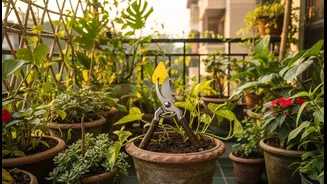
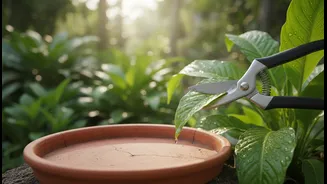
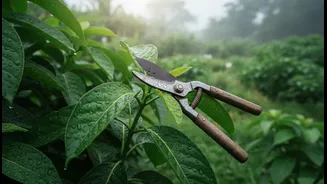
You don't need a large toolkit for balcony pruning. For most jobs, a good pair of bypass pruners (also called secateurs) is essential. These work like scissors, making clean cuts that heal quickly. For delicate tasks like deadheading flowers or trimming herbs, a smaller pair of micro-tip snips is perfect. They allow for precision in tight spaces without damaging nearby stems. Whatever tool you use, make sure it’s sharp and clean. Dull blades can crush stems and leave wounds that are vulnerable to disease. It's good practice to sterilize your tools with a disinfectant before and after use, especially when cutting away diseased parts.
Basic Techniques for Healthy Growth
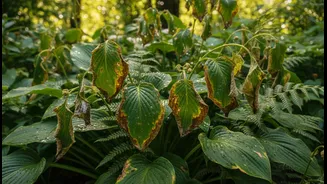
Pruning doesn’t have to be complicated. Start by removing the three ‘Ds’: any growth that is dead, diseased, or damaged. This alone can significantly improve a plant's health. Another key technique is 'deadheading', which is simply removing spent flowers. This stops the plant from putting energy into making seeds and instead encourages it to produce more blooms. To encourage bushier, fuller growth, you can 'pinch' or trim back the tips of stems. This prompts the plant to send out new side shoots, preventing it from becoming long and leggy. Always try to cut just above a leaf node (the point on a stem where a leaf emerges), as this is where new growth will start.
When to Prune Your Balcony Plants
The best time to prune depends on the plant. A general rule for many plants is to do any major shaping in late winter or early spring, just before the main growing season begins. For flowering plants, it’s often best to prune them right after they finish blooming. This prevents you from cutting off the wood that will produce next season’s flowers. Many flowering plants popular in Indian balconies, like Bougainvillea and Jasmine (Mogra), benefit from a good trim after their main flush of flowers to encourage another round of blooms. You can, however, remove dead or yellowing leaves at any time of year.