


Why Europa Is So Alluring
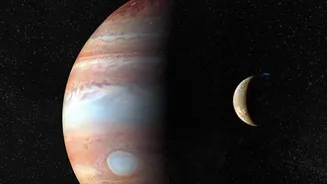
For decades, scientists have been captivated by Europa, one of Jupiter's largest moons. Though its surface is a frigid landscape of cracked ice, evidence strongly suggests the presence of a global ocean of liquid saltwater beneath it. This ocean might
contain more than twice the amount of water found in all of Earth's oceans combined. The key to this hidden warmth is a process called tidal flexing. Europa's orbit around the gas giant Jupiter causes it to be constantly squeezed and stretched, generating enough heat to keep its subsurface ocean from freezing solid. This same process could also create hydrothermal vents on the seafloor, similar to those on Earth that teem with life, potentially supplying the chemical energy and nutrients needed for living organisms to thrive in total darkness.
Meet the Interplanetary Detective
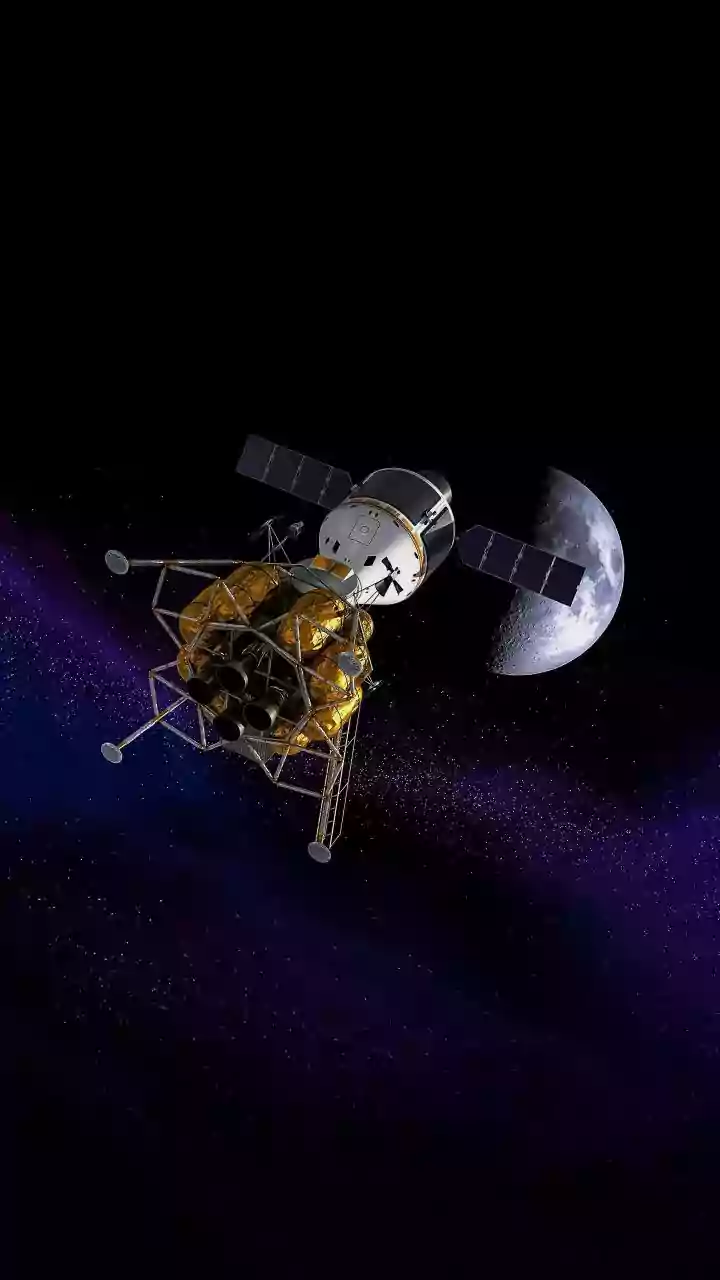
The Europa Clipper is NASA's largest and most advanced interplanetary spacecraft ever built, designed specifically for this deep-space investigation. With its solar arrays deployed, it spans over 30 meters, about the length of a basketball court. Launched in October 2024, the spacecraft is currently on a long and winding journey to the outer solar system, scheduled to arrive in orbit around Jupiter in April 2030. Instead of orbiting Europa directly—which would expose it to Jupiter's fatally intense radiation fields—the Clipper will orbit Jupiter and perform a series of nearly 50 high-speed, low-altitude flybys of the moon. This clever trajectory allows it to gather detailed data while minimizing radiation damage, before retreating to a safer distance to transmit its findings back to Earth.
A Toolkit for Discovering Life's Ingredients
Europa Clipper is not a life-detection mission itself, but an astrobiology mission designed to determine if Europa has the conditions necessary for life. To do this, it carries a sophisticated suite of nine scientific instruments. An ice-penetrating radar, called REASON, will peer deep beneath the icy shell to confirm the ocean's existence and measure the ice's thickness. Spectrometers like MISE and Europa-UVS will analyze the composition of the surface ice and the thin atmosphere, searching for salts and organic molecules. Other instruments, including a magnetometer, will measure the salinity and depth of the ocean by studying Europa's magnetic field. The spacecraft will also look for plumes of water vapor that may erupt from the surface, offering a chance to directly sample the ocean's chemistry without having to drill through the ice. Though recent analysis has cast some doubt on how frequent these plumes are, the Clipper's instruments are prepared to investigate any that it finds.
The Long Wait for Answers
Patience is essential for this mission. After its launch on October 14, 2024, Europa Clipper embarked on a 5.5-year, 2.9-billion-kilometer journey. To get to Jupiter, it's using gravity assists—swinging by Mars in March 2025 and returning for a final boost from Earth in December 2026. It will finally enter Jupiter's orbit in April 2030, with its first close flyby of Europa scheduled for the spring of 2031. The main science phase is planned to last about four years, with the spacecraft meticulously scanning different regions of the moon during each pass. This means the most crucial data will begin to arrive in the early 2030s, gradually building a complete picture of this mysterious world.