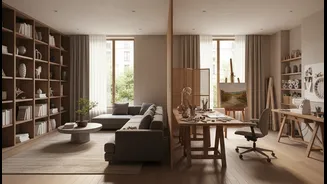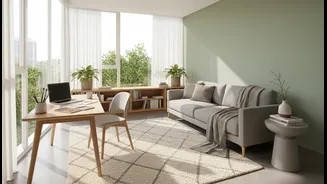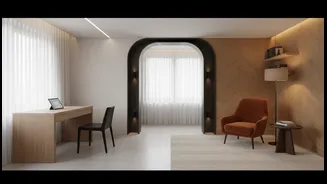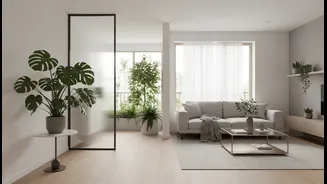




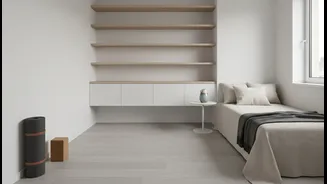


First, Define Your Quiet Zone’s Purpose
Before you add a single cushion, decide what this space is for. Is it a reading nook where you can get lost in a book? A meditation corner for quiet reflection? Or a space to simply sit with a cup of chai and listen to music? Defining its purpose will
guide all your choices. This isn't just about filling a space; it's about creating a personal retreat. An alcove naturally offers a sense of seclusion, making it ideal for a spot dedicated to unwinding away from the main hustle and bustle of the living room or kitchen. A clear intention ensures the space becomes a true escape you'll actually use.
Build a Foundation of Comfort
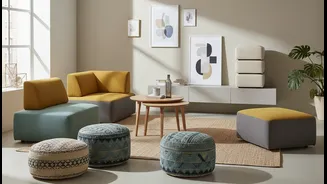
The key to a successful quiet zone is comfort. You don't need a custom-built bench, which can be costly. Instead, consider a plush armchair that fits the space without feeling squeezed. Alternatively, embrace a more grounded approach with floor seating. A thick, comfortable floor cushion, a traditional gadda, or a stack of large pillows can create an inviting and flexible space. Pair this with a small side table or a stool, just big enough to hold a book, a lamp, and a drink. This ensures everything you need is within arm's reach, preventing you from having to get up and break your state of relaxation.
Master the Mood with Lighting
Harsh overhead lighting is the enemy of a tranquil atmosphere. The goal is to create a warm, focused glow. A floor lamp with an adjustable arm is a great option, as it can be directed right onto your book or lap. A simple table lamp on a small stool also works beautifully. For a softer, more decorative touch, consider winding fairy lights or LED strips around shelves or the alcove's edges. The key is to keep the light contained within the nook, which enhances its feeling of being a separate, special zone. If the alcove has a window, make the most of the natural light during the day.
Soften Sounds Without Construction
You don’t need to install soundproof insulation to create a sense of quiet. The secret is to use soft materials to absorb ambient noise. Start by placing a thick rug on the floor. If there's a window, heavy curtains made of velvet or another dense fabric can make a significant difference in dampening outside sounds. Hanging a textile, like a beautiful tapestry or a piece of macrame, on the back wall of the alcove not only adds a decorative touch but also helps to absorb sound. Even a well-stocked bookshelf can act as a sound barrier; the dense mass of books is surprisingly effective at reducing noise transmission.
Personalise Your Pocket of Peace
This corner should feel uniquely yours. Add elements that bring you joy and calm. This could be a few small potted plants to bring a touch of nature indoors, or a single piece of art on the wall. Floating shelves are perfect for holding a few favourite books, a scented candle, or framed photos. You can also define the space by painting the inside of the alcove a different colour from the surrounding walls. A slightly darker, warmer shade can make the space feel more intimate and cocoon-like, transforming it into a clear focal point.