



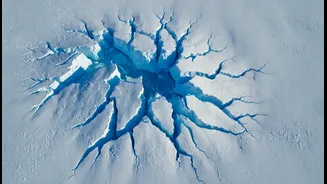


The Planet's Shrinking Sun Visor
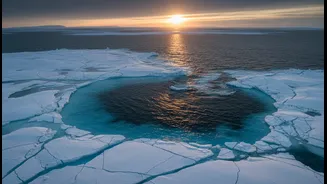
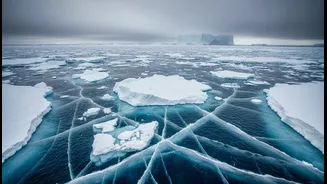
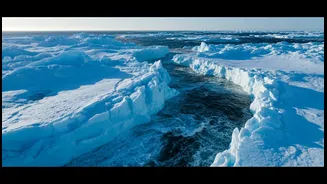
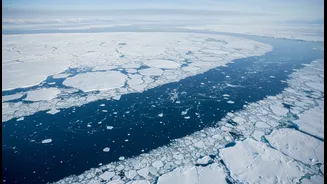
Think of polar ice as Earth's giant, reflective sun visor. This bright white surface has a high albedo, meaning it reflects most of the sun's energy back into space, keeping the planet cool. Dark, open ocean water, by contrast, does the opposite—it absorbs
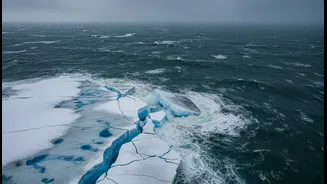
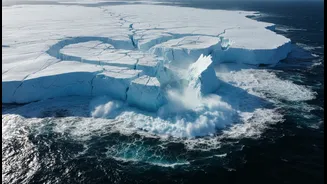
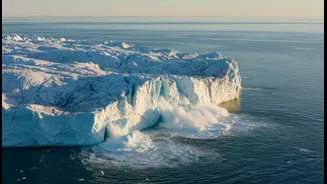
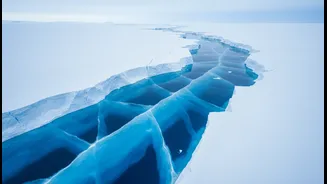
about 90% of the sunlight that hits it. As global temperatures rise, this ice visor shrinks, exposing more dark ocean. This creates a dangerous feedback loop known as the 'ice-albedo effect': the ocean absorbs more heat, which in turn melts more ice, further accelerating warming. This process, called Arctic amplification, is causing the Arctic to warm two to four times faster than the rest of the planet. Data from early 2026 confirmed this alarming trend, with Arctic sea ice extent hitting record lows for the winter maximum.
A Wobbly Jet Stream Causes Weather Chaos
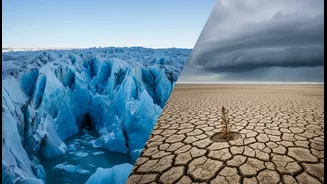
What happens in the Arctic doesn't stay in the Arctic. The rapid warming of the polar region has a profound effect on the jet stream—a high-altitude river of air that steers weather systems across the Northern Hemisphere. A stable jet stream, maintained by a strong temperature difference between the cold pole and the warmer equator, typically flows in a relatively straight path. But as the Arctic warms and that temperature difference weakens, the jet stream becomes slower, wavier, and less predictable. This 'wobble' allows frigid polar air to plunge south, causing extreme cold snaps in some regions, while lobes of warm air push far to the north. More importantly, these lazy, meandering waves can cause weather patterns—like heatwaves, droughts, or persistent rain—to get stuck in place for days or even weeks.
The Direct Impact on India's Monsoon
This disruption is now being directly linked to India's lifeblood: the monsoon. Recent studies, including significant work from the Indian Institute of Tropical Meteorology and the National Centre for Polar and Ocean Research, have established a strong connection between declining Arctic sea ice and changes in the Indian Summer Monsoon Rainfall (ISMR). Research shows that reduced sea ice in early summer (June-July) influences the monsoon's behaviour later in the season (August-September). Specifically, it has been linked to a westward shift in rainfall, leading to increased precipitation over western and northwestern India. While this might sound beneficial, it signifies a fundamental change in a system on which over a billion people depend for agriculture, water, and economic stability. Unpredictability is the new, dangerous norm.
More Than Just Rain: Sea Level and Currents
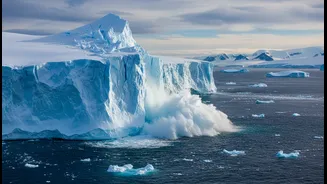
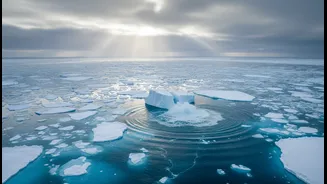
The consequences extend beyond altered rainfall. While the melting of floating sea ice itself does not directly raise sea levels, the same warming that destroys it is also melting land-based ice, like the Greenland ice sheet, at an alarming rate. This adds enormous volumes of fresh water to the ocean. The complete melting of the Greenland ice sheet alone could raise global sea levels by over 20 feet. This puts India's densely populated coastal cities, from Mumbai to Chennai, at immense risk from flooding and storm surges. Furthermore, this massive influx of cold, fresh water into the North Atlantic threatens to disrupt major ocean currents, like the Atlantic Meridional Overturning Circulation (AMOC), which helps regulate global climate by transporting heat. A slowdown or shutdown of this 'conveyor belt' would have far-reaching and catastrophic consequences for weather patterns worldwide.