


The Unsung Hero of Spaceflight
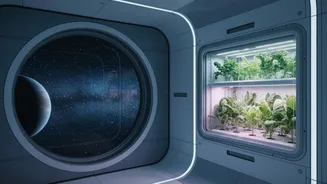
To establish a sustained human presence on the Moon and later Mars, astronauts need more than just a ride. They require a complex, self-sustaining habitat. This is the job of the Environmental Control and Life Support System, or ECLSS. It’s a suite of technologies
designed to manage everything from air pressure and temperature to waste and water, essentially creating a miniature, habitable Earth inside a spacecraft. Without it, long-duration missions beyond the reach of quick resupply from Earth would be impossible. While rockets get the glory, the ECLSS is the quiet workhorse that makes long-term space exploration feasible.
The Ultimate Recycling Program
For missions lasting months or years, launching with all the necessary water and oxygen is not practical due to the immense weight and cost. The solution is recycling. The advanced ECLSS being refined for Artemis builds on decades of experience from the International Space Station (ISS). The system is a marvel of closed-loop engineering. It captures moisture from every possible source—the crew's breath, sweat, and even urine—and purifies it. The Water Processor Assembly (WPA) uses a series of filters and a catalytic reactor to turn wastewater into potable water that is often cleaner than what we drink on Earth. Simultaneously, the air revitalization system scrubs carbon dioxide exhaled by the crew and removes any harmful trace contaminants.
A Leap Beyond the Space Station
The life support systems on the ISS have been incredibly successful, achieving water recovery rates between 93% and 94%. However, recent upgrades have pushed this technology even further. A new Brine Processor Assembly (BPA), tested on the station, allows NASA to extract even more water from the urine brine left over from initial processing. This innovation has boosted the total water recovery rate to an incredible 98%. This level of efficiency is a game-changer. It dramatically reduces the amount of water that needs to be launched from Earth, a critical factor for missions to Mars where resupply is not an option.
Why Packing Light Is a Big Deal
Every kilogram of mass launched into space has a significant cost. By recycling nearly all of its water and air, the ECLSS drastically cuts down on the mass that future lunar and Martian habitats will need. An astronaut requires about a gallon of water per day for drinking, food preparation, and hygiene. For a multi-year Mars mission with a crew of four, this would add up to an impossible amount of stored water. Highly efficient recycling means that instead of launching thousands of kilograms of water, missions can launch more scientific instruments, habitats, or other critical hardware. This is the core principle of in-situ resource utilization (ISRU), or living off the land, and it starts with using what you bring as efficiently as possible.
From the Moon to Mars
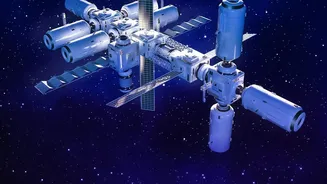
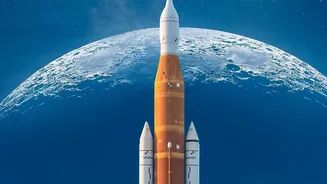
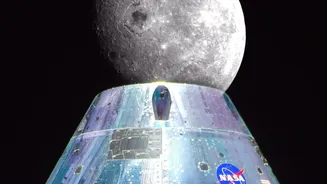
The Artemis program is explicitly designed to be "Mars forward." The technologies and procedures tested on and around the Moon, including the advanced ECLSS, are the proving ground for the first human missions to the Red Planet. The lunar Gateway, a planned orbiting outpost, and future surface habitats will rely on these regenerative systems to support crews for extended periods. Operating these systems on the Moon will provide invaluable data on their reliability and maintenance needs in a deep-space environment, building the confidence and experience required to tackle the much longer and more challenging journey to Mars.