






What Are These New Warnings?
The Food Safety and Standards Authority of India (FSSAI) has proposed a new Front-of-Pack Labelling (FoPL) system to make nutrition information clearer for consumers. Instead of having to search for the fine print on the back of a package, this system will
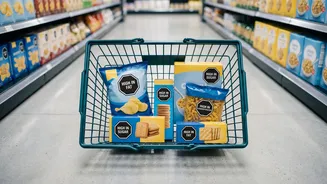
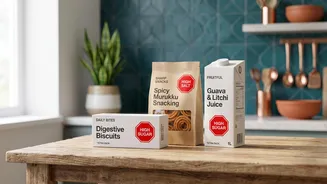
place a highly visible warning label on the front. The proposed design is a distinct red hexagon on a white background, which will be located on the top left of the package. This label is designed to be a quick, at-a-glance signal for shoppers. The move is part of a broader public health effort to help Indians make more informed dietary choices amid rising concerns about non-communicable diseases.
Decoding the Red Hexagon
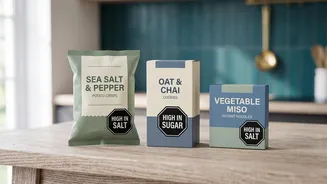
The red hexagon will act as a direct warning, containing simple text to flag specific nutrients of concern. Depending on the product's contents, the label will explicitly state “HIGH SUGAR,” “HIGH SALT,” or “HIGH FAT.” If a product exceeds the recommended threshold for more than one of these nutrients, a single hexagon will list all applicable warnings, for instance, showing both “HIGH SUGAR” and “HIGH FAT.” The regulator has also proposed a specific warning, “CONTAINS NON CALORIC SWEETENER,” for products with artificial sweeteners. The font size inside the hexagon is intended to be larger than the text in the detailed nutrition panel on the back, ensuring it's easy to read.
Why This System Was Chosen
This warning-based approach replaces an earlier proposal for a star rating system, known as the Indian Nutrition Rating (INR), which was deemed potentially confusing by some experts. The FSSAI has now shifted to a model similar to the one used in Canada, which uses clear, direct warnings. The goal is to correct the information imbalance on packaging, where positive marketing claims like “natural” or “multigrain” are often more prominent than details about high levels of unhealthy ingredients. By placing a simple, direct warning on the front, the system empowers consumers to assess a product's health implications quickly, even during a rushed shopping trip.
What Foods Will Have These Labels?
The warning labels will apply to a wide range of packaged foods and beverages. The decision to apply a label is not based on whether a food is considered “processed” but on whether it exceeds the specific thresholds for added fat, sugar, and salt as defined by the Dietary Guidelines for Indians, 2024. However, there are some proposed exemptions. Single-ingredient foods that are inherently high in fat, sugar, or salt—such as ghee, edible oils, honey, jaggery, and table salt—will not carry these front-of-pack warnings. These items will continue to be regulated by other existing labelling rules.
How to Use the New Labels When Shopping
When these labels roll out, they can serve as a powerful tool. Use them to compare similar products on the shelf. For example, if you are choosing between two brands of biscuits or breakfast cereals, a “HIGH SUGAR” warning on one can help you quickly identify the healthier option. However, it is important to remember that these labels are a guide, not a final judgment. A food without a warning isn’t automatically a health food, and one with a warning can still be consumed in moderation as part of a balanced diet. Always check the full ingredients list and the nutrition panel for a complete picture, paying attention to serving sizes to understand your total consumption.