
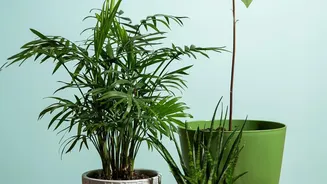
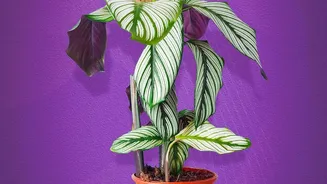
The Myth: A NASA-Fueled Dream
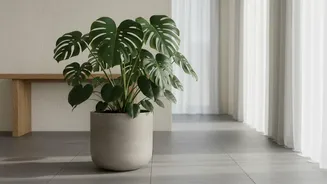
The popular belief that houseplants are powerful air purifiers can be traced back to a landmark 1989 NASA study. In a quest to find ways to clean the air in sealed space stations, researchers discovered that common houseplants could indeed remove harmful
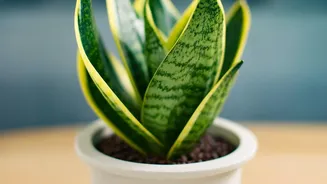
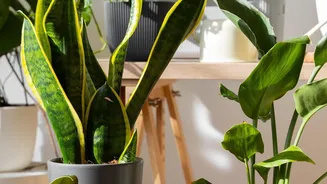
volatile organic compounds (VOCs) like formaldehyde and benzene from the air in a sealed chamber. The study was a sensation. Soon, lists of 'air-purifying' plants like the Snake Plant, Peace Lily, and Spider Plant became common knowledge for anyone looking to create a healthier home environment. The idea was simple and elegant: bring nature indoors not just for beauty, but for a constant, quiet detoxification of the very air you breathe. It was a comforting thought, suggesting a simple, natural solution to the problem of indoor pollution from furniture, paints, and cleaning supplies.
The Reality: A Problem of Scale
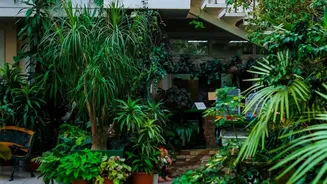
The dream, however, runs into trouble when it leaves the lab. The NASA study was conducted in small, sealed chambers—an environment that has very little in common with a typical home or office. Our living spaces are much larger and are constantly subject to air exchange, whether through open windows, doors, or ventilation systems. A 2019 meta-analysis that reviewed decades of research on the topic brought this issue into sharp focus. The researchers concluded that while plants do remove VOCs, their rate of removal is incredibly slow. To have a significant impact on indoor air quality, you would need an almost impossible number of plants—somewhere between 10 and 1,000 plants per square meter of floor space. To put that into perspective, you might need over 680 plants in a standard 1,500-square-foot home to achieve the air-cleaning effects seen in lab studies. In reality, the natural ventilation of a building does far more to remove pollutants than a room full of plants.
The New Context: Where Plants Can Help
This doesn't mean the original science was wrong, only that its application was misunderstood. The 'new context' provided by recent analysis is one of perspective. While a few potted plants won't act like a high-tech air filter, research continues to explore the nuances. Some studies suggest that the microorganisms in the soil around the plant's roots play a significant role in breaking down pollutants. In this symbiotic relationship, the soil microbes metabolise the VOCs that are absorbed. Furthermore, some studies have shown that plants can help reduce airborne microbes and fine particulate matter in a room, contributing to a generally healthier environment in other ways. So, while they may not be the VOC-sucking powerhouses we once thought, the story isn't over. They contribute, but just not in the dramatic way we hoped.
So, Should You Ditch Your Plants?
Absolutely not. This updated understanding doesn’t make houseplants useless; it simply reframes their value. The primary benefits of having plants indoors are psychological and aesthetic. Numerous studies have shown that being around plants can reduce stress, boost mood, improve concentration, and increase feelings of well-being. They connect us to nature, beautify our living spaces, and give us a rewarding hobby. These benefits are real, measurable, and significant. Viewing your plants as companions that enhance your mental health and home decor, rather than as workhorses for air purification, is a more accurate and still very positive perspective. The joy and tranquillity they bring to a home are powerful reasons to keep them around.
The Best Ways to Actually Clean Your Air
If you are genuinely concerned about indoor air quality, there are far more effective strategies than simply buying more plants. The most effective method is source control—reducing the number of pollutants you bring into your home in the first place. This means choosing low-VOC paints, furniture, and building materials whenever possible. The second key strategy is ventilation. Regularly opening your windows and doors to allow fresh air to circulate is one of the most effective ways to dilute and remove indoor pollutants. Using exhaust fans in kitchens and bathrooms also makes a big difference. For those with significant concerns, allergies, or respiratory issues, investing in a mechanical air purifier with a HEPA filter is a proven and highly effective solution. These devices are designed specifically to remove fine particles and VOCs from the air at a much faster rate than any reasonable number of plants could manage.